Bafang M410 and M510 electric bike motors: features, compatibilities, mounting and recurring issues
The Bafang M410 and Bafang M510 central motors belong to a generation of drivetrains designed for modern electric bikes, particularly electric mountain bikes, sport touring bikes and some utility bikes. They illustrate Bafang's evolution towards compact central motors, capable of providing sustained assistance while integrating into frames specifically designed for electrification.
Here is a detailed presentation of the Bafang M410 and M510, differences to know with the M560, faults to watch out for and precautions to take before buying a replacement motor.
1. The Bafang M410: a powerful central motor for electric mountain bikes

The Bafang M410 is a crank motor designed particularly for electric mountain bikes. It stands out with a maximum torque rating of 95 Nm, associated with a nominal power of 250 W in the configuration presented by Bafang. Its aim is to provide effective assistance on climbs, on technical paths, and during accelerations, while maintaining a relatively compact motor.
Its high torque allows for appreciable assistance at low speeds, particularly when the terrain becomes steep. However, as with any central motor, the result depends on the selected gear ratio, pedalling cadence, level of assistance, and system programming.
The M410 may be of interest to a user looking for an electric mountain bike equipped with a Bafang motor integrated by the bike manufacturer. However, it is important to distinguish this integration from a universal conversion kit: on an e-bike originally equipped with the M410, the frame, mounts, casings, and electronic components have been selected to work together.
2. The Bafang M510: a lighter and more responsive e-MTB motor

The Bafang M510 represents an evolution of the brand's e-MTB motor. Bafang announces a maximum torque of 110 Nm and a weight of 2.9 kg. The manufacturer also indicates an 18% weight reduction and a 20% increase in maximum power compared to the previous generation it refers to. The motor supports a pedalling cadence of up to 120 rpm.
These features make it suitable for sporty electric bikes, particularly for electric mountain bikes capable of tackling climbs and changes in pace. An extended assistance cadence can help maintain a response from the motor when the cyclist pedals quickly.
However, the torque of 110 Nm does not mean that the motor constantly delivers this force, nor that it is necessarily more efficient in all situations than a motor with a lower value. Programming, available electrical power, temperature, transmission, and assistance management also influence the actual behaviour.
Care must also be taken with the different versions of the M510. The European system presented by Bafang has a nominal power of 250 W, while some variants or configurations intended for other markets may have different characteristics. The exact reference of the system installed on the bike should therefore be checked before any intervention.
3. Bafang M410 or M510: what are the differences?
Characteristic | Bafang M410 | Bafang M510 |
|---|---|---|
Main use | Electric mountain bike | Sporty electric mountain bike |
Nominal power of the presented European versions | 250 W | 250 W |
Announced maximum torque | 95 Nm | 110 Nm |
Published weight | Approximately 3.3 kg in the technical catalogue | 2.9 kg |
Maximum assistance cadence | To be checked according to the version | Up to 120 rpm announced |
Replacement with the other model | Compatibility to check | Compatibility to check |
The data comes from Bafang's technical pages and documents. The weights and performances may depend on the exact variant and generation of the system.
The M510 stands out for its higher advertised torque and lower weight. However, this does not mean that it is a direct replacement for the M410. The geometry of the fixings, the casings, the control system, and the programming must be checked.
4. What are the recurring issues with Bafang M410 and M510?
It is important to distinguish between documented failures and problems frequently reported on forums. The publicly available information does not allow for a reliable statistical ranking of recurring faults specific to the M410 and M510, nor does it confirm that a manufacturing defect systematically affects these motors.
On the other hand, several symptoms may be encountered on e-bikes equipped with Bafang central motors. They deserve to be known to guide the diagnosis.
Cracking noises when pedalling
A crack when the cyclist puts significant pressure on the pedals does not necessarily indicate an internal failure of the motor. It may originate from the motor fixings, crank arms, pedals, chainring, transmission, or the interface between the motor and the frame.
Owners of M510 and M560 setups have notably described cracking noises related to play or contact in the fixing area. These accounts remain anecdotal and do not demonstrate a widespread defect in these motors.
One must start by checking for play, verifying the torque settings, and inspecting the interfaces. One must not arbitrarily add washers or modify the fixings without checking the manufacturer's procedure: incorrect assembly can damage the frame or the motor.
Intermittent assistance or engine cut-outs
A assistance that interrupts during pedalling may be related to an insufficiently charged battery, a voltage drop under load, a poorly engaged connector, a sensor, a controller fault, or a communication error.
Before condemning the motor, it is advisable to check the battery status, accessible connections, and any error codes. An electronic diagnosis is often necessary to accurately identify the cause.
Unusual resistance when pedalling
A significant resistance when turning the cranks with the motor off may come from the transmission, a bearing, an internal mechanical fault, or incorrect assembly. It deserves inspection, particularly after a motor or casing replacement.
In systems where the controller or internal components have been replaced, a parts incompatibility or calibration issue can also cause abnormal behaviour. Technical discussions on the M510 and M560 report a few cases of this type, without allowing for a general failure frequency to be deduced.
Electronic errors and communication problems
A screen that lights up without assistance, a persistent error or a motor that refuses to start may stem from communication between the various elements of the system. The error code, the controller reference, and the firmware version must be noted before replacing components.
It is preferable to use diagnostic tools suited to the OEM version of the system. A motor from a complete bike may have settings or electronics different from those of another version marketed under the same name.
Accelerated wear of the transmission
Central motors transmit their effort to the chain, the chainring, and the cassette. High torque, frequent use uphill, gear changes under heavy load, and poorly maintained transmission can accelerate the wear of these components.
To limit the phenomenon, it is recommended to temporarily reduce the effort on the pedals during gear changes, to avoid forcing at very low cadence on too long a gear, and to replace the chain when it reaches its wear threshold.
5. How to diagnose a Bafang M410 or M510 before replacing it?
A methodical diagnosis prevents replacing a still functional motor.
Start by noting the complete reference of the motor and that of the bike. Photograph the label, the display, the connectors, and any error codes. Then check the battery charge status, accessible connections, and specific symptoms: total absence of assistance, cuts, mechanical noise, resistance to pedalling, or faults only under heavy load.
If the motor no longer works, it is necessary to determine whether the problem comes from the power supply, the controller, the sensors, or the motor block itself.. Replacing a battery or a controller may sometimes be sufficient, but only if the diagnosis confirms the failure of that component.
Avoid opening the motor without documentation and without the appropriate skills. A poorly executed disassembly can damage seals, bearings, sensors, or connections, and complicate any potential warranty coverage.
6. Can a Bafang M410 or M510 be repaired rather than replaced?
It depends on the fault and the availability of parts.
A peripheral intervention, a damaged connector, or a replaceable component can sometimes be repaired without changing the entire motor. However, if the fault concerns specific internal components or unavailable electronics, replacing the motor unit may be the only reasonable solution.
You should ask the repairer whether the diagnosis concerns the motor itself or the entire electrical system. A quote should distinguish the cost of the part, labour, diagnosis, programming, and any necessary mechanical adaptations.
When a motor is replaced, it is important to keep the reference of the old unit and to check the compatibility of the replacement motor with the battery, display, wiring harness, and frame.
7. Replacing a Bafang M510 with a more powerful motor: is it possible?
Technically, some modifications are conceivable, but they are not limited to installing a motor that displays more watts or torque.
A M560, for example, can deliver superior performance depending on the configuration. However, it is essential to check that the frame is designed to accommodate this motorisation, that the transmission and battery are suitable, and that the controller, display, and software are compatible.
It is also necessary to consider the regulations. In France and the European Union, a conventional e-bike must have a maximum continuous rated power of 250 W, pedal-assist, and a cut-off of assistance at 25 km/h. A more powerful motorisation or an unrestricted configuration may take the bike out of this regulatory category and entail other obligations.
Therefore, one should not confuse the maximum powers announced by the manufacturer with the continuous rated power allowed for a conventional e-bike.
8. What to check before buying a second-hand Bafang motor?
A second-hand motor can be interesting for repairing a bike, but the model name alone is not enough to guarantee compatibility. Before purchasing, ask for the complete reference, the origin of the motor, its history, any error codes, and proof that it was functioning correctly before disassembly.
Also check the connectors, fixings, signs of impact or moisture, and the presence of the necessary parts for assembly. If possible, have the compatibility confirmed by the bike manufacturer or a repairer before paying.
For a M510 or M560, it is particularly important to confirm the version of the system and the mechanical interfaces. A motor claimed to be compatible in an online discussion may require adaptations or may not work with the electronics of the relevant bike.
Conclusion: M410, M510 and M560, three motors to compare beyond torque
The Bafang M410 is a central motor for electric mountain bikes offering up to 95 Nm as advertised. The Bafang M510 goes further with 110 Nm as advertised and a published weight of 2.9 kg, while the M560 targets different configurations and can reach 150 Nm depending on the version.
For a broken bike, the best choice is not necessarily the most powerful motor: it is the one that is compatible with the frame and the electrical system, available in parts and suited to the bike's use.
Cracking noises, assistance cut-outs, electronic errors or unusual resistance when pedalling warrant a diagnosis, but do not automatically prove that the motor is out of service. Feedback from owners can help guide the research, but should not be confused with reliability statistics.
Finally, before replacing a central motor, one should always compare the cost of repair, that of a replacement unit and the possibilities for adaptation. A thorough check of references and compatibility can avoid unnecessary purchases and extend the life of the electric bike.
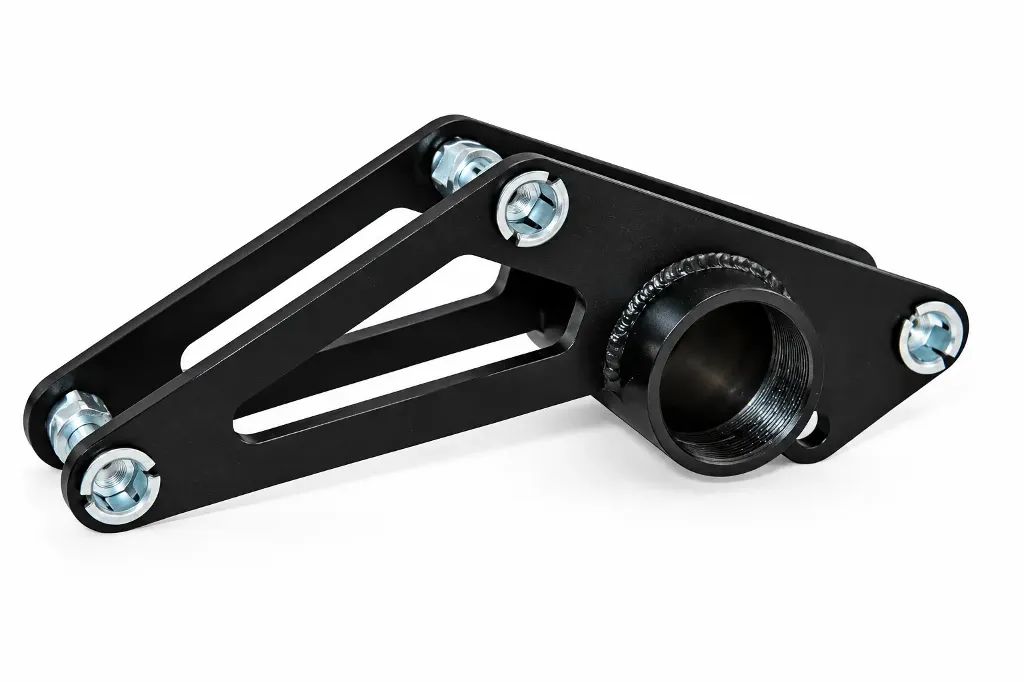
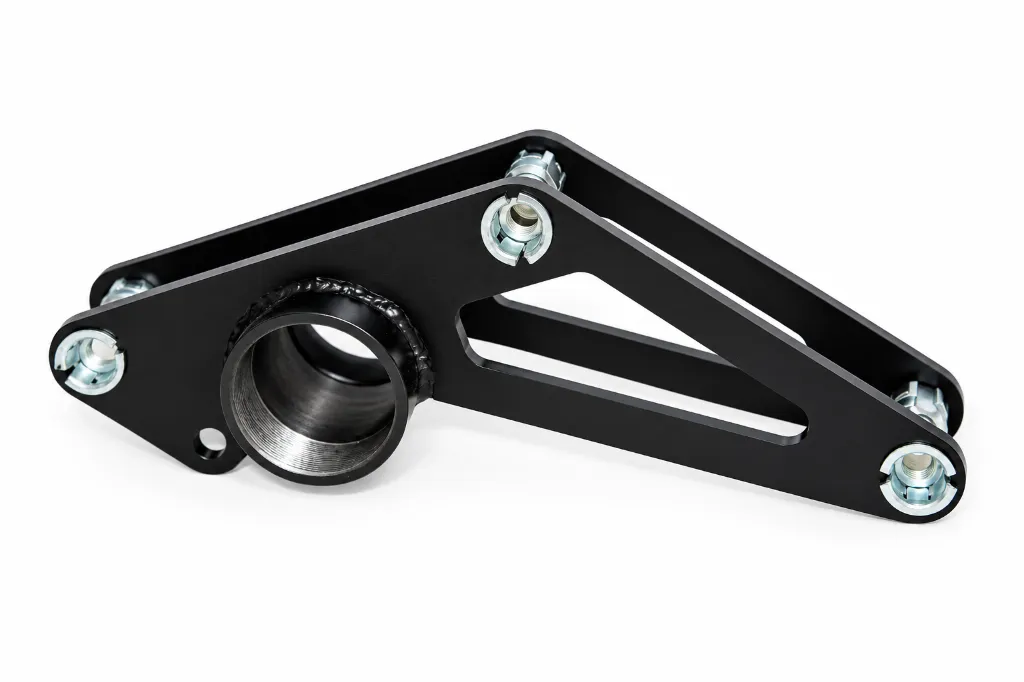
The last option remains, of course, to replace it with the adapter presented on this page.