Yamaha PW-X3 Motor

The Yamaha PW-X3 is a central motor designed for sporty electric mountain bikes. Compact, relatively lightweight and with significant torque, it has been developed to meet the needs of riders looking for dynamic assistance in climbs, accelerations, and technical sections. It can be found on electric mountain bikes from brands like Haibike, Douze, and certain partner manufacturers.
But like any electric bike motor, the PW-X3 can encounter malfunctions over the miles. Assistance cut-outs, sensor faults, connection issues, mechanical noises or electronic failures: the symptoms can have various origins and do not necessarily mean that the entire motor is out of service.
This article presents the operation of the Yamaha PW-X3, its technical specifications, the bikes it is mounted on, the issues to watch for, and the possibilities for diagnosis and repair.
Presentation of the Yamaha PW-X3: a motor designed for electric mountain biking

Launched for the 2022 model year bikes, the Yamaha PW-X3 succeeds the PW-X2. It has been designed for sporty electric mountain bikes and particularly for practices that heavily rely on motorisation: enduro, all-mountain, trail and mountain hiking.
Yamaha has focused on three main areas : reducing the size of the motor, decreasing its weight and increasing its torque. The result is a more compact drive unit than the PW-X2, with a quick response from the first pedal strokes.
The PW-X3 belongs to the Yamaha central motor family. It is installed at the bottom bracket and transmits its effort to the bike's transmission. This architecture has an advantage when climbing: the motor takes advantage of the different gears of the cassette to adapt its operation to the speed and incline.
Yamaha particularly highlights the responsiveness of its assistance. The motor quickly delivers its torque as soon as the cyclist applies pressure to the pedals. This feature is useful in technical sections, when it is necessary to restart the bike at low speed or tackle a steep incline.
The PW-X3 has also been designed to provide a natural pedalling behaviour, with assistance that complements the effort rather than giving a feeling of propulsion that is completely independent of the cyclist.
Technical specifications of the Yamaha PW-X3 motor
A torque of 85 Nm for difficult climbs
The maximum torque of 85 Nm is one of the main selling points of the PW-X3. It allows the motor to provide significant assistance when the cyclist encounters a steep slope or needs to restart their mountain bike after a technical section.
This figure places it in the category of sporty motors of its generation, alongside motors like the Bosch Performance Line CX, the Shimano EP8 or the Brose Drive S Mag.
However, it is important to keep in mind that maximum torque alone is not enough to compare two motors. Electronic management, available power, pedalling cadence, and assistance programming strongly influence the sensations on the ground.
A compact motor weighing only 2.75 kg
The announced weight of 2.75 kg is another strong point. Yamaha states that the PW-X3 is about 10% lighter than the PW-X2 and that its footprint is reduced by approximately 20%.
This compactness offers more freedom to bike manufacturers to work on frame geometry, suspension kinematics, and ground clearance. For a mountain bike intended for enduro, these parameters are important: they contribute to the bike's behaviour in technical descents and rough sections.
An ISIS bottom bracket interface
The PW-X3 uses an ISIS bottom bracket axle interface with an announced width of 128 mm. This architecture contributes to the compact design of the motor and the positioning of the cranks.
Note: this feature does not mean that the motor can be replaced by another central motor that also has an ISIS interface. The frame attachment, casing dimensions, electronics, and connections remain specific to the system.
What are the common faults of the Yamaha PW-X3?
The PW-X3 has a design intended for sporting use, but it remains exposed to the usual stresses of electric mountain bikes: vibrations, humidity, mud, shocks, high mechanical demands, and temperature variations.
However, it is important to make a distinction: there is no sufficiently robust public statistic to assert that the PW-X3 suffers from a manufacturing defect or a particular recurring internal failure. The symptoms below are possible issues with a Yamaha PW-X3 system and its peripherals, and not evidence of a systematic weakness of the motor.
The Yamaha PW-X3 motor no longer starts
This is one of the most concerning symptoms for an owner. The screen may remain off, turn on without the motor providing assistance, or display an error message.
Several factors may be responsible: poorly installed battery, faulty connector, communication failure, control issue, or motor failure.
The first thing to do is to check the battery installation, its charge level, and the accessible connections. It is also helpful to restart the system once, according to the manual procedure. If the fault recurs, a workshop diagnosis should be carried out.
Yamaha assistance cuts out while pedalling
Assistance that disappears when climbing or after several minutes of riding can have several origins.
The battery may experience a voltage drop under heavy load. A connector may also cause intermittent power supply. Finally, a system protection or electronic failure may interrupt the assistance.
It should be noted if the cut-off always occurs under the same conditions: steep slope, EXPW mode, high temperature, low charge level or passage over very rough terrain.
The speed sensor is no longer working
The speed sensor and its magnet play an essential role in the operation of the assistance system. If the sensor no longer correctly detects the passage of the magnet, the motor may interrupt the assistance or display an error message.
This problem does not mean that the PW-X3 is out of service. It is necessary to check that the magnet is present, correctly positioned and sufficiently close to the sensor. A sensor moved after a shock or an intervention on the wheel can cause this type of malfunction.
The Yamaha manual specifically provides for this check when a speed detection fault is reported. It recommends restarting the system, selecting an assistance mode and riding briefly, while checking the positioning of the magnet.
The range of the electric bike decreases significantly
A decrease in range is not necessarily related to the motor. On a bike equipped with the PW-X3, the battery is a cause to examine as a priority.
Over time, the cells lose some of their capacity. The phenomenon is more visible when the battery is stressed by repeated climbs or high assistance modes.
Yamaha also reminds that cold can temporarily reduce range and that battery wear may require replacement.
It is therefore necessary to distinguish between an aging battery and a motor that would be consuming energy abnormally.
The PW-X3 motor makes noise
A central motor that starts to knock, squeak or produce an unusual noise must be checked.
On an electric mountain bike, the noise may come from the motor, but also from the cranks, chainring, pedals, chain or motor block attachments.
A creaking sound only when the cyclist pushes hard on the pedals does not allow for a conclusion of an internal failure. On the other hand, a grinding noise, abnormal resistance or a mechanical blockage require stopping the use of the bike until it is checked.
The system displays an electronic error
The Yamaha system can indicate a fault with an error message. On some displays, the manual specifically mentions the appearance of the term "ER" accompanied by a description.
The Yamaha procedure involves turning off and then turning the system back on. If the problem persists, the manufacturer recommends having the bike examined by a dealer.
It is not advisable to erase or bypass a fault without identifying the cause. A recurring error may indicate a communication, sensor, battery or motor problem.
How to diagnose a fault in the Yamaha PW-X3 motor?
An effective diagnosis starts with the simplest checks. One should not dismantle the motor as soon as assistance disappears.
Here are the main checks to perform before concluding a fault in the motor block:
Symptom | Initial checks | Possible intervention |
|---|---|---|
Screen off | Battery, installation, controls, connections | Power check |
Screen on, no assistance | Error code, speed sensor, connectors | Electronic diagnostic |
Cut-outs on climbs | Battery, connections, temperature | Battery and system test |
Low autonomy | Battery capacity, temperature, assistance mode | Battery test or replacement |
Mechanical noise | Transmission, cranks, fixings | Mechanical control of the motor and the bike |
Persistent error | Displayed message, fault history | Diagnostic at a Yamaha dealer |
Yamaha electronic diagnostic
To go further, a specialised workshop can use the Yamaha diagnostic tools available in its professional network. These tools allow for consulting system information and guiding fault finding.
The interest is to distinguish a motor fault from a battery, display, sensor, or electrical harness fault.
This is particularly important when the bike is equipped with a motor integrated into a specific frame. Replacing the complete motor without having identified the defective part can lead to significant expense without resolving the initial problem.

Can a Yamaha PW-X3 motor be repaired?
Yes, some faults can be repaired, but it is necessary to distinguish between interventions on peripherals and those concerning the internal components of the motor.
A defective battery, a misplaced speed sensor, a damaged connector or a harness with poor contact do not necessarily require replacing the motor.
On the other hand, an internal electronic failure or a mechanical defect in the motor block may require specialised intervention, or even the replacement of the entire unit.
Peripheral repairs
The most accessible operations generally concern external components: checking the speed sensor, replacing a wiring element, checking connectors, checking the battery or replacing a compatible control element.
These operations must be carried out with parts that exactly match the installed system.
Internal repairs of the motor
The PW-X3 is an integrated central motor. Its opening should not be equated with routine maintenance.
Bearings, gears, internal transmission elements or electronics may require specific skills and parts. It is also important to consider the sealing of the motor after reassembly.
It is therefore important to contact a workshop that truly understands Yamaha PW-X3 systems, and not just universal conversion motors.
Where to have a Yamaha PW-X3 repaired?
The first point of contact is usually the dealer of the bike brand. They are the ones who know the original components, any updates and compatible references.
Yamaha also provides technical information and documents for eBike systems on its official website.
If the bike is no longer supported by its seller, look for a workshop specialised in Yamaha motors and explicitly ask if they work on the PW-X3. Not all e-bike repairers necessarily have the tools or access to the necessary parts.
Can a Yamaha PW-X3 motor be replaced by another motor?
This is an important question when the PW-X3 is irreparable or its replacement is too expensive.
The answer is generally no, not by a simple standard exchange with a Bosch, Shimano, Brose or Bafang.
The PW-X3 has a mechanical interface and an electronic architecture specific to Yamaha. The frame has been designed around this motorisation, with specific mounting points, available space, and geometry.
One must also consider the battery, the controller, the display, the controls, the wiring harness, and the software. A Bosch motor cannot therefore be installed directly in place of a PW-X3 simply because it develops a similar torque.
Even replacing it with another Yamaha motor requires checking the references and mechanical and electronic compatibility. The proximity between PW-X3 and PW-XM is not enough to guarantee a direct substitution on all bikes.
My Yamaha PW-X3 is irreparable: what solutions are there to save my bike?
When a PW-X3 motor reaches the end of its life, the owner may find themselves in a frustrating situation: the bike is still in good condition, but the original motorisation is no longer available, or its replacement becomes economically unviable.
It's particularly unfortunate on a high-end mountain bike like a Haibike NDURO, an ALLMTN or a Yamaha MORO 07. The frame, suspensions, wheels and brakes can still have several years of use ahead of them.
There are then several possibilities: to look for a compatible second-hand motor, to find a new or refurbished unit, or to consider a complete transformation of the motorisation.
Save My eBike: an alternative to replacing the bike
It is in this last category that Save My eBike.
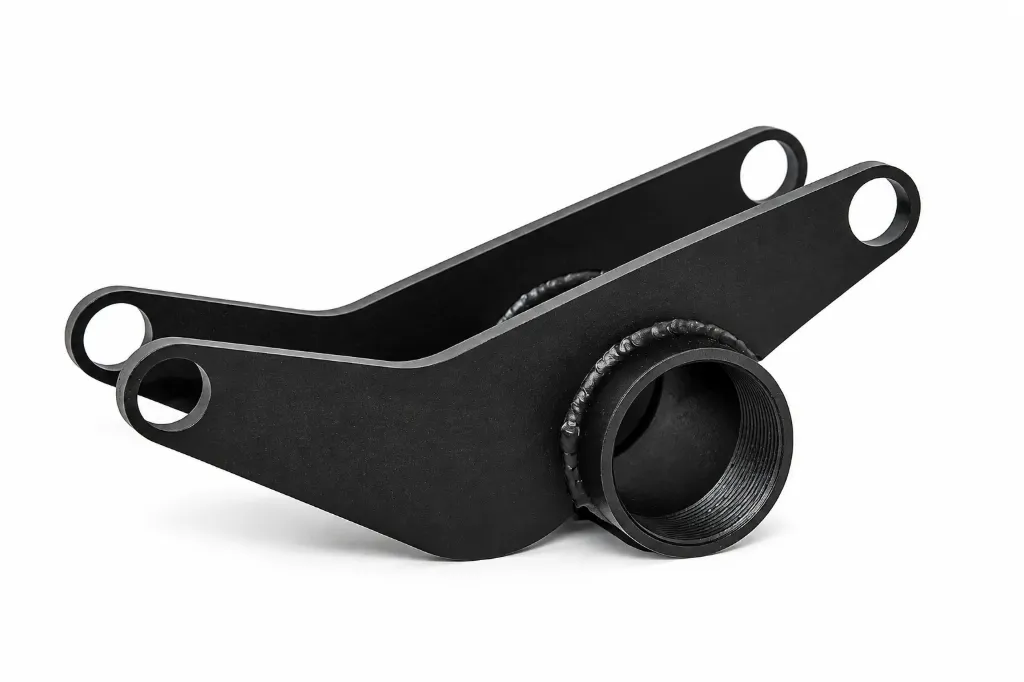
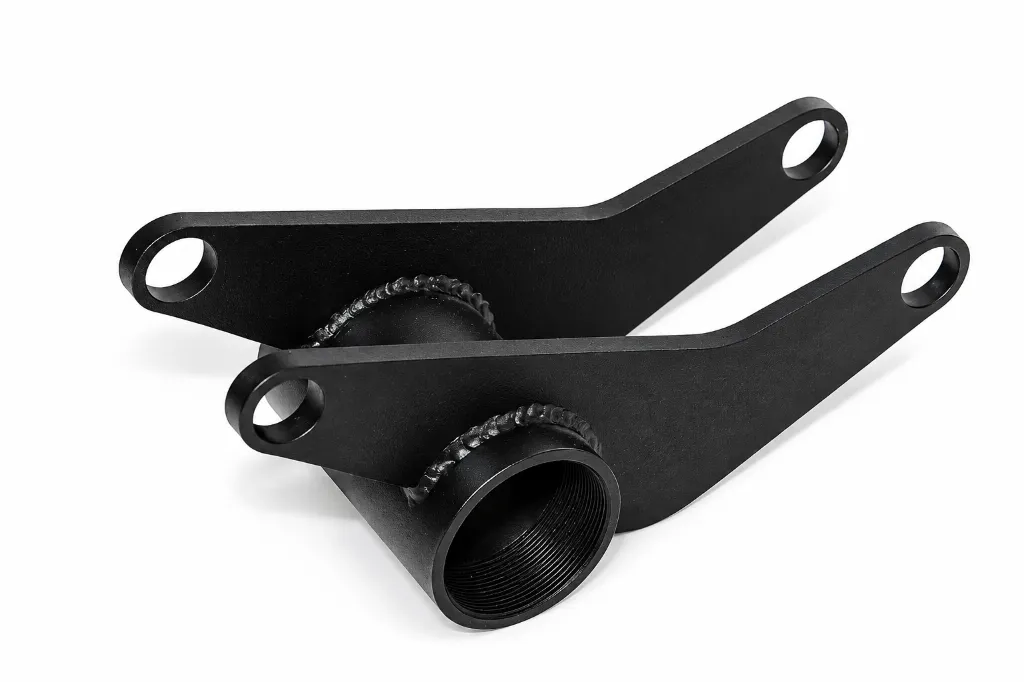
The principle of the Save My eBike adapters is to mechanically replace certain integrated central motors with an adaptation piece that allows for the reinstatement of a bottom bracket and to consider a new configuration.
This approach allows, when the frame and adapter are compatible, to keep the bike and no longer depend on its original motorisation which has become difficult to repair or replace.
The adapter for Yamaha PW-X3 is particularly compatible with Bafang type BBS02 and Tongsheng Z2 motors if a re-electrification of the bike is desired.
Let’s not forget: a motor at the end of its life does not necessarily mean that an electric bike has reached the end of its own.