Your electric bike equipped with a Yamaha central motor or Giant SyncDrive refuses to start, cuts assistance on a steep hill, makes a rattling noise or displays an error code? Before thinking about replacing the bike, be aware that most breakdowns have an identifiable cause, and that several solutions exist, including when the original motor is no longer repairable. Here is a comprehensive guide to understand, diagnose and act.
Yamaha and Giant SyncDrive motors: what are we talking about?

Yamaha has been manufacturing electric bike motors since 1993 and today equips many European brands. The most common ranges are the PW-X (first generation sports), the PW-X2 (introduced around 2019, more powerful and more compact) and the PW-X3 (the most recent generation, lighter and quieter). In addition, there are more accessible motors like the PW-S, PW-SE, PW-ST or PW-CE.
The Giant brand, on the other hand, sells its bikes with motors called SyncDrive, developed with Yamaha. The SyncDrive Life and SyncDrive Sport are the most common on Giant, Liv and Momentum mountain bikes, touring bikes and urban bikes. Their design is very similar to that of Yamaha motors, which explains why their breakdowns are very similar.
The symptoms of a faulty Yamaha or SyncDrive motor
A motor that is wearing out rarely warns with a sudden stop. Here are the most common signs, classified by type of failure.
The assistance no longer activates at all. The screen lights up, the battery is charged, but the motor does not respond when you pedal. The cause is often a speed sensor, a corroded connector, or a communication fault between the motor, the screen, and the battery.
The assistance cuts out intermittently. The motor runs for a few minutes, then cuts out, especially on bumps, after rain, or uphill. This behaviour suggests moisture ingress, a damaged cable harness, or overheating.
Jerkiness or irregular assistance. The motor pushes in jerks instead of delivering a progressive thrust. The torque sensor or the speed sensor are the prime suspects.
Abnormal noises. Cracking, squeaking, banging, or 'clicking' with each pedal stroke generally indicate wear of the reduction gears or the internal freewheel clutch.
An error code on the screen. Yamaha and Giant screens display a numerical code when a fault is detected. This code guides the diagnosis (sensor, communication, temperature, battery), but it is not sufficient on its own to identify the part to be replaced. The manufacturer's manual or a workshop equipped with the Yamaha diagnostic tool allows for precise decoding.
A motor that 'brakes'. If pedalling becomes hard when the assistance is cut off, or if the motor resists rotation, the internal clutch or a gear is likely damaged.
Common symptoms depending on the model

Each generation has its weaknesses. The table below summarises the most common faults encountered in the workshop.
Model | Most common symptoms | Usual causes |
|---|---|---|
Yamaha PW-X | Cracking or clicking noise with each pedal stroke, loss of progression, assistance cutting out on hills | Wear of gears and internal clutch, aging of seals, moisture in the casing |
Yamaha PW-X2 | Intermittent loss of assistance, recurring error code, jolting, reducer noise, motor not responding after washing or rain | Speed or torque sensor, oxidised connectors, water ingress, electronic board, gears |
Yamaha PW-X3 | Communication errors, motor not starting, loss of assistance without specific noise, squeaking after a certain mileage | Electronic fault, firmware, sensors, spare parts sometimes available only as a complete unit |
Giant SyncDrive Life | Weak or absent assistance, error code, noise under load, screen not communicating | Speed sensor, wiring, battery connector, wear of internal transmission |
Giant SyncDrive Sport | Cut-outs on hills, jolting, reducer noises, communication fault | Sensors, moisture, internal gears, electronics |
A point deserves to be highlighted for the PW-X2 and PW-X3 : these motors are very compact and highly integrated, which makes them efficient, but also difficult to dismantle. Internal parts are rarely offered individually, and the manufacturer often recommends a complete engine block exchange, at a sometimes high cost.
First reflexes: check before concluding a motor failure
Many failures attributed to the engine actually have a simpler cause. Before you go to the workshop, take ten minutes to check a few points.
Start with the battery : check that it is well charged, properly secured in its holder and that its contacts are clean. An oxidised contact or a poorly locked latch is enough to cut off the power. If possible, try another compatible battery to rule out a fault on this side.
Next, examine the speed sensor, located on the left stay, as well as the magnet fixed on a spoke of the rear wheel. If the magnet has moved, if the sensor is too far away or if its cable is pinched, the motor no longer receives the speed information and refuses to provide assistance. This is one of the most common faults, and the least expensive to correct.
Also inspect the motor connectors, the screen and the battery. Disconnect them, clean them with an appropriate contact spray, let them dry and then reconnect them firmly. Absolutely avoid high-pressure cleaning, which remains the primary cause of water ingress into motors.
Finally, remember to completely restart the system : turn off the bike, remove the battery for a few minutes, put it back and turn it on again. This is sometimes enough to clear a temporary fault.
How to repair a Yamaha or SyncDrive motor?
If these checks yield nothing, several levels of repair are possible, from the simplest to the most complex.
The workshop diagnosis. A certified Yamaha or Giant dealer, or an equipped independent repairer, can connect the official diagnostic tool. It reads the error codes, tests the sensors, checks the communication between components, and can update the system software. This is the essential step to determine whether the fault comes from the motor itself or a peripheral element.
The replacement of a sensor or cable. Speed sensor, link cable or faulty connector: these parts can be replaced without opening the motor, at a reasonable cost. This is the most favourable scenario.
Opening and refurbishing the motor. On a PW-X or a PW-X2, some specialised workshops know how to open the casing to replace worn gears, the clutch, bearings or seals, and address moisture issues. This operation requires experience, suitable tools, and available parts. It is rarer on PW-X3 models, whose architecture is newer and more sealed.
The standard exchange of the motor unit. If repair is not possible, the manufacturer offers to replace the entire motor. This reliable solution is, however, costly, and the price sometimes exceeds the residual value of a bike a few years old. Supply times can also be long.
The good reflex is to request a detailed quote before any intervention, specifying the exact model of the motor (the reference is engraved on the casing) and the year of the bike.
Irreparable or unavailable motor: Save My E-Bike saves your bike
Sometimes no repair is reasonable: parts unavailable, quote exceeding the value of the bike, motor permanently damaged. In this case, many owners abandon a frame that is still in excellent condition, with a battery and components that are still perfectly usable. It's an avoidable waste.
It is precisely for this situation that Save My E-Bike offers adapters for Yamaha PW-X2 and PW-X3, as well as for other similar models. They allow you to revive the bike when the original motor can no longer be repaired, without changing bikes or discarding a still healthy frame. You extend the lifespan of your equipment, avoid the cost of a new bike, and reduce the environmental impact of your mobility.
To find out if your bike is compatible, locate the reference of your motor on the casing, note the brand and model of the bike, then consult the product sheet of the corresponding adapter on Save My E-Bike or contact the team directly.
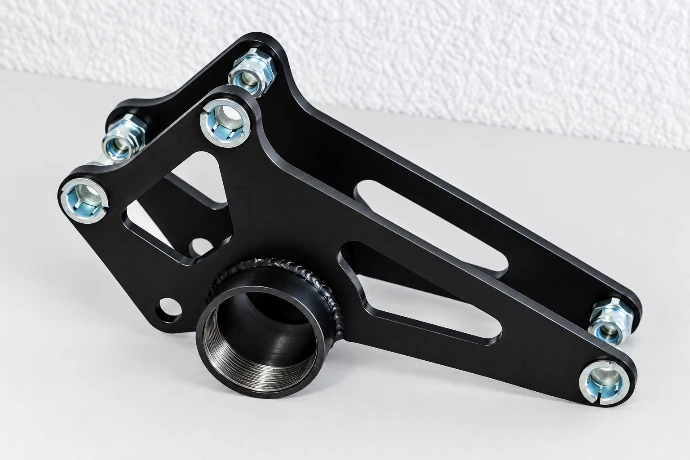
Yamaha PW-X2 Adapter
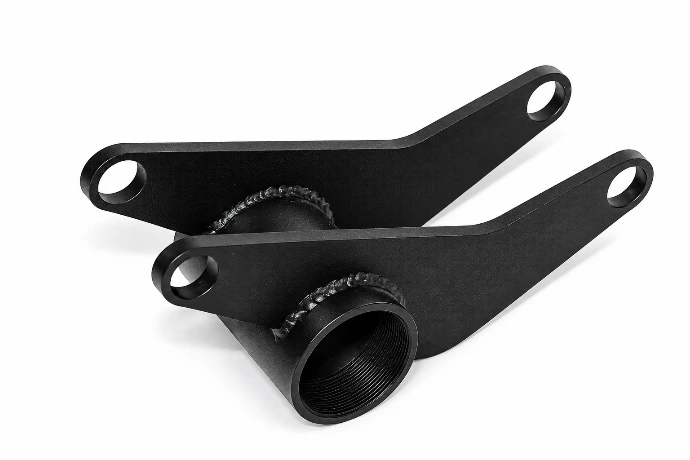
Yamaha PW-X3 Adapter
FAQ: your questions about Yamaha and SyncDrive motor failures
Why won't my Yamaha PW-X2 motor start anymore? The most common causes are a misaligned speed sensor, a corroded connector, a poorly seated battery, or a communication fault. A diagnosis with the Yamaha tool can clarify.
What does an error code on my Yamaha or Giant screen mean? It indicates the area where a fault has been detected (sensor, communication, temperature, battery). Refer to your bike's manual or have the code read by an equipped workshop.
Is the Giant SyncDrive motor the same as a Yamaha motor? The SyncDrives are developed with Yamaha and share a technical base very close to Yamaha motors, which explains comparable failures.
Can a PW-X3 motor be repaired? Some peripheral faults (sensor, wiring, software) can be easily fixed. For internal faults, spare parts are often limited and replacing the entire unit is common.
My motor is irreparable, what should I do? You can request a standard exchange from the manufacturer or opt for a Save My E-Bike adapter, compatible with PW-X2, PW-X3 motors and similar models, to save the bike.
How can I avoid another failure? Avoid high-pressure cleaning, protect the connectors, have the system checked every year, and address any unusual noises promptly.
In summary
A a Yamaha or SyncDrive motor failing is not necessarily synonymous with a broken bike. Start with simple checks, get a reliable diagnosis, then compare repair options. And if the motor really can't be saved, Save My E-Bike offers adapters for PW-X2, PW-X3 and similar models, so your bike can keep rolling.