When an electric bike motor reaches the end of its life, the first reaction is often to think that the entire bike needs to be replaced. However, a noisy motor that no longer provides assistance or displays an error code is not necessarily irreparable. Depending on the motorisation, its age, the availability of parts, and the design of the electrical system, several solutions can be considered: diagnosis, internal repair, replacement with an identical motor, refurbished motor, or, in some cases, complete motorisation change.
This question currently concerns many owners of electric bikes from Bosch, Shimano, Yamaha, Brose, Bafang, Mahle, Fazua, or even older motorisations such as Impulse. It also concerns urban bikes, electric hybrid bikes, e-MTBs, and increasingly cargo bikes, whose value and frame robustness often justify a repair rather than replacement.
The good news is therefore simple: an electric bike motor at the end of its life does not necessarily mean that the bike is destined for the scrap heap.
Electric bike motor dead: does it really need to be replaced?
Before ordering a new motor, it is essential to determine what is actually broken. A lack of electric assistance can be caused by the motor itself, but also by the battery, the controller, a sensor, a cable, a connection, the display, or the system software.
Bosch also recommends having a motor failure diagnosed by a specialised dealer with the appropriate diagnostic tools. The manufacturer specifies that certain maintenance operations and minor repairs can be carried out on its drive units, while in the case of a major fault, replacement of the unit may be necessary. Bosch also indicates that it can recover certain units for refurbishment when possible.
This distinction is fundamental. To say that a Bosch Performance Line CX motor, a Shimano EP8, a Brose Drive S Mag or a Bafang BBS02 is “dead” without having carried out a precise diagnosis can lead to unnecessary expenditure.
A bearing noise, mechanical play, a damaged internal belt, a worn seal, or certain electronic components can sometimes be replaced. Conversely, a major electronic failure or a motor for which parts are no longer available may make replacement more relevant.
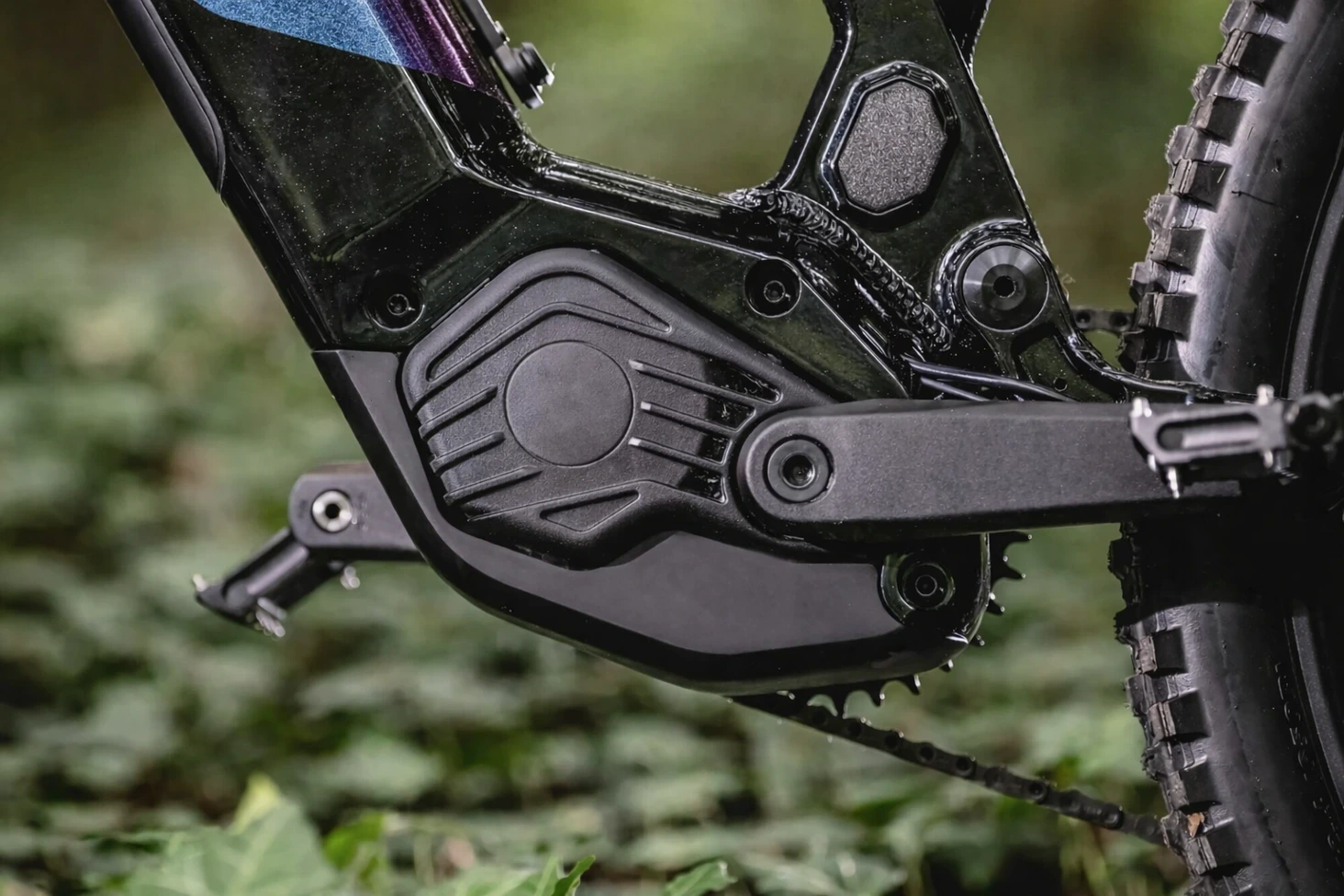
The main motors affected by the ageing of electric bikes
The issue is particularly interesting because the e-bike market has evolved significantly over the last fifteen years. Bikes equipped with the first generations of Bosch, Shimano Steps, Yamaha, or Brose motors are now starting to reach significant mileages.
At Bosch, for example, there are different generations of Active Line, Active Line Plus, Performance Line and Performance Line CX, as well as the more recent generations of the Smart System. These motors equip a multitude of bike brands, including hybrid bikes, e-MTBs and cargo bikes. The Tern GSD and the Tern HSD use Bosch motors, for example, while the GSD can accommodate a Cargo Line motor developing up to 85 Nm.
At Shimano, the motors E5000, E6100, E7000, E8000, EP8, EP801 and EP6 have been integrated into a great many models. The case of Orbea is particularly interesting: the brand uses Shimano EP motors on models like the Denna and even develops its own software settings around these motors.
Brose occupies a special place in the market with its motors Drive C, Drive T, Drive S, Drive S Mag and Drive Alu, used by various bike manufacturers. Specialized has notably developed several electric bikes around motors from this family.
Finally, Bafang represents a different category. The brand provides complete systems to many manufacturers, but also offers conversion motors like the BBS01, BBS02 and BBSHD, which have helped popularise the replacement or transformation of classic bikes and some older motors.
Bafang now has service structures in Europe, notably in France, Germany, Italy, Denmark and the Netherlands. The manufacturer also indicates it has service and training networks for distributors and workshops.
Repairing an electric bike motor rather than replacing it
The repair is often the first solution to consider when the motor has a mechanical problem.
This approach is particularly interesting for Bosch and Brose motors, as a genuine specialised repair sector has developed in Europe. Interventions may involve bearings, seals, gears, certain belts, sensors, or various electronic components depending on the generations.
In Germany, for example, R&S E-Bike has specialised in the repair of Bosch motors and announces repairs generally ranging from about 150 to 350 € depending on the motor and the issue. Other German specialists like Technix E-Bikes claim to have repaired several thousand motors and particularly work on Bosch and Brose.
This German specialisation is not insignificant. The country has a very large fleet of electric bikes and a particularly developed culture around the repair and refurbishment of drivetrains.
In Spain, BiciFix, based in Gandía, is another interesting example. The company claims to repair, in particular, Bosch, Brose, Shimano, Yamaha, Bafang, Mahle, and Polini motors. It offers diagnostics, opens the motor, performs the necessary intervention, and then tests the motor before returning it. Its published rates give an order of magnitude of 150 to 350 € for certain repair or maintenance operations.
The repair of an electric motor should therefore not be confused with a simple replacement of parts. A specialised workshop must be able to identify the source of the failure, determine which parts are actually damaged, and then check the functioning of the motor.
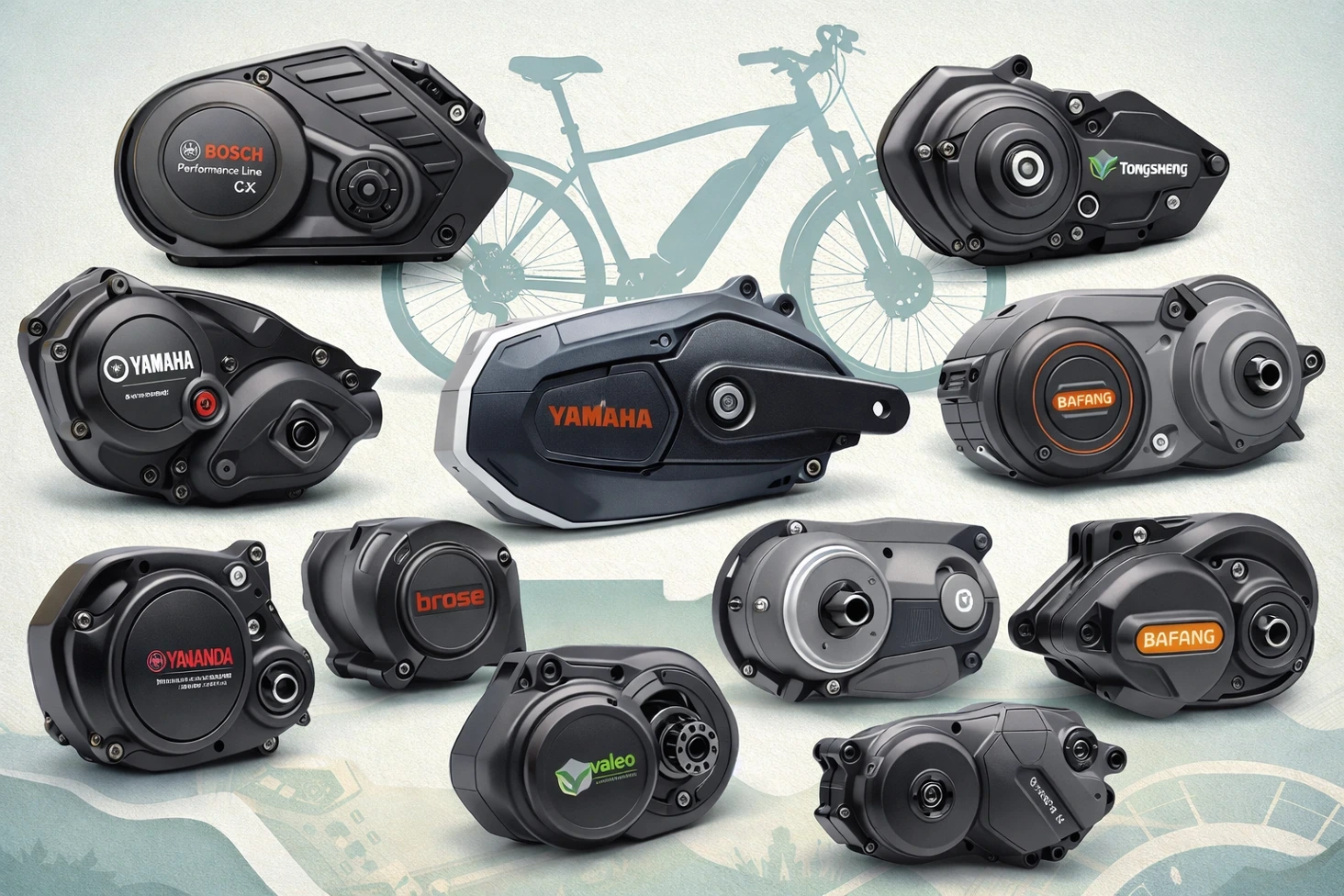
What to do with an end-of-life Bosch motor?
The case of Bosch is particularly interesting because the system is very integrated. A Bosch motorisation is not just a motor: it works with a battery, a controller, a control interface, a display, and, depending on the generations, a software ecosystem.
It is precisely for this reason that a Bosch motor cannot simply be replaced by a Shimano or a Bafang while keeping the rest of the system. The constraints are both mechanical and electronic.
Bosch officially states that minor repairs of certain drive units can be carried out by specialised dealers. However, when a major fault is found, the unit must be replaced, and Bosch may, in some cases, recover the motor for refurbishment. The manufacturer also specifies aiming for the availability of spare parts for at least six years after the last delivery of the product to the bicycle manufacturer, although this availability may vary depending on the components.
This means that an old Bosch must be examined on a case-by-case basis. If a part is available and the motor can be repaired, the repair may be economically viable. If the motor is too old, irreparable, or particularly expensive to replace, the owner may then consider another strategy.
It is precisely at this moment that the question of retrofit becomes interesting.
And what if my Shimano EP8, E6100 or E8000 motor is irreparable?
Shimano motors are another emblematic case.
Shimano has an international network of Shimano Service Centers, consisting of certified shops and workshops using diagnostic tools and Shimano parts.
A bike equipped with a Shimano Steps or Shimano EP should ideally be diagnosed with the appropriate tools before any decision. An electronic error does not automatically mean that the motor needs to be replaced.
The problem arises when the motor itself is actually out of service or when an older generation becomes difficult to replace economically.
Replacing it with a Bosch is not a straightforward solution. A Shimano EP8 motor, for example, is designed to operate within a Shimano ecosystem that includes its battery, controls, and electronics. Orbea illustrates this integration well: its bikes using Shimano EP motors can benefit from specific software settings developed by the brand.
In this context, replacing a Shimano with another system generally means replacing the drive system, and not simply unscrewing one motor to install another.
The Brose case: repair, refurbish or change the drive system
The Brose motor is particularly interesting for bikes that are starting to age.
Brose itself recommends regular technical inspections of its system and advises contacting an authorised dealer for repairs. The manufacturer also indicates that it has developed a remanufacturing allowing for the recovery of certain parts from Brose motors, to check them and to reuse them in refurbished units.
This approach shows that an electric motor at the end of its life is not necessarily waste.
The Brose case is all the more interesting as independent specialists have developed around these motors. In Germany, Brose Repair offers, for example, the repair and replacement of Brose motors and presents repair as an alternative to buying a new motor.
In France, E-Motor Lab and eVTT work on several families of Bosch, Brose and Yamaha motors. The workshops indicate that they have tools to open the motors and replace certain faulty components. Their published rates start around €269 for certain Bosch generations and €279 for certain interventions on Brose, depending on the model and the service.
France now has a genuine market for the repair of e-bike motors.
A few years ago, a failure of an electric bike motor often led directly to the replacement of the entire unit. However, the French landscape is evolving rapidly.
Workshops like E-Motor Lab, eBike Motor Service, Repair & Run, VELOREPAR, CycloCare, ECOX or some independent workshops have specialised in the diagnosis and maintenance of Bosch, Shimano, Brose, Yamaha, Bafang or Fazua systems. However, the services and levels of intervention vary considerably from one workshop to another.
In Toulouse, VAE Maintenance and workshops like Kelbo Vélo also illustrate the growing interest in multi-brand diagnostics. Kelbo Vélo notably indicates that it works on Bosch, Shimano Steps, Bafang and Brose and offers diagnostics for VAE motors and batteries.
One point deserves to be emphasised: a workshop that knows how to diagnose a motor is not necessarily capable of opening it and repairing it. Some workshops limit themselves to electronic diagnostics and the replacement of the drive unit, while others actually carry out internal mechanical interventions.
This is a question to ask systematically before dropping off your bike.
Belgium: specialised workshops capable of going further
Belgium also has an interesting network of specialists.
In Liège, Mes10 Cycles announces that it works on Bosch, Shimano, Bafang, Brose, TQ, Fazua and Mahle. The workshop notably offers electronic diagnostics, firmware updates, motor repairs and battery tests. The announced rate for certain electrical interventions is €85/h, while a complete diagnostic is priced at €65.
This approach is particularly interesting for a motor at the end of its life: before replacing a unit that can cost several hundred euros, the diagnosis allows us to determine whether the problem actually comes from the motor.
Other Belgian workshops such as MFI Bike, CycloLibre, KAMEO Bikes or Pro Velo Namur can also serve as entry points for a diagnosis or VAE support, but again, it is necessary to distinguish between simple maintenance and a genuine internal motor repair. Prices and services are evolving: it is therefore advisable to confirm the coverage of the exact model before shipping or travelling.
Germany: the repair of electric motors is already a genuine sector
Germany deserves special attention when discussing the lifespan of VAE motors.
Companies such as R&S E-Bike, Technix E-Bikes or WEKROPP-Bike have specialised in the repair of electric drives. WEKROPP indicates, for example, that it works on Bosch, Brose, and Yamaha and accepts motors sent from various regions of Germany.
Technix, for its part, announces over 3,000 repaired motors and coverage of different Bosch generations as well as other manufacturers. The announced turnaround time is generally a few days after receipt of the motor.
The German model is particularly interesting because the owner can sometimes have only the motor removed by their bike shop, and then send it to a specialised workshop. This avoids transporting the entire bike and makes the repair of a relatively old motor economically feasible.
Switzerland: repair, refurbishment and technical specialisation
Switzerland also has some interesting specialists.
eVeloMech, in Hasle bei Burgdorf, has specialised in parts and the repair of several motors, including Bosch, Panasonic and Brose/Specialized. The company documents, for example, interventions on Bosch Performance Line CX motors and Brose/Specialized drivetrains.
In Zurich, VELOV offers a mobile service capable of diagnosing various Bosch, Shimano, Yamaha, Brose, Bafang and Mahle systems. However, the company specifies that it leaves the internal electronic repairs of batteries and motors to the manufacturers or relevant specialists.
This distinction is particularly instructive: the diagnosis and mechanical repair of the bike can be carried out by a general workshop, whereas opening a motor or battery requires a different level of skill and equipment.
Denmark: diagnosis above all
In Denmark, BikeDoctor is an interesting example of a service specialised in electric bikes. The company operates at home and states that it is certified on Bosch, Bafang and Brose systems. Its electric bike diagnosis starts at 499 DKK, including travel.
This approach illustrates an important trend in countries where electric bicycles are highly developed: diagnosis is becoming a standalone service.
When a motor makes noise, gradually loses power, or suddenly stops working, the goal is not immediately to change the motor. It is necessary to determine whether the failure comes from the drive system, the battery, the wiring, or an electronic component.
And what if the motor is truly irreparable?
This is where the question becomes particularly interesting.
Imagine a cargo bike equipped with a Shimano EP8 motor. The frame is perfectly sound, the wheels are good, the transmission is still in good condition, and the battery could potentially be replaced. However, the motor has definitively failed, and its replacement is too expensive or no longer readily available.
The first solution is to look for an identical motor. The second is to search for a refurbished motor. The third is to have the existing unit repaired.
But there is a fourth possibility: to transform the bike to give it a new motorisation.
This is the principle of retrofit.
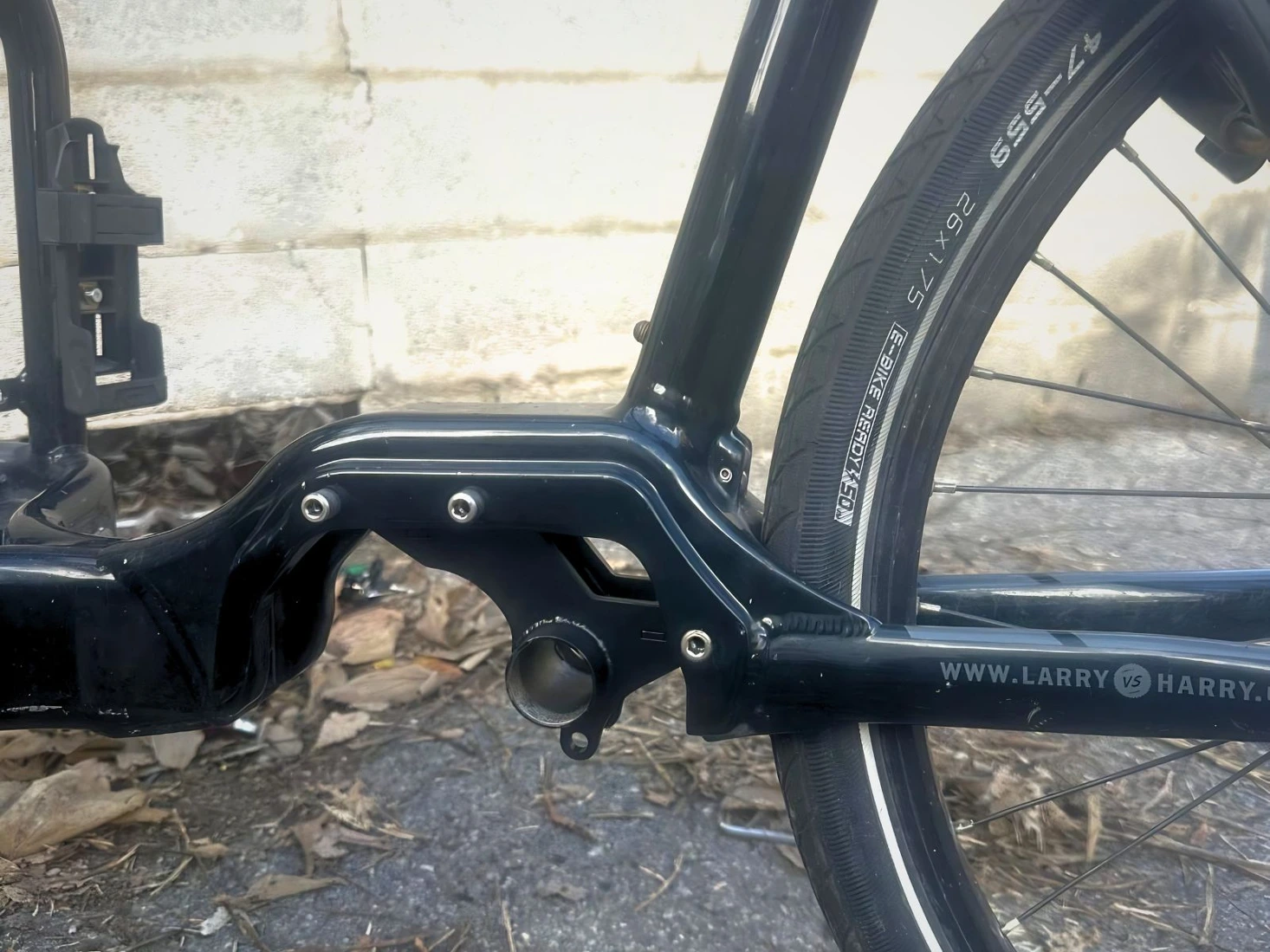
The Save My eBike adapters: another way to save an electric bike
This is precisely the positioning of Save My eBike. The solution is to use a mechanical adapter designed to replace the old central motor and allow for a different configuration.
The adapters from Save my eBike are designed to be fitted in place of an old motorisation on certain frames and allow for a return to a classic bottom bracket if necessary, to re-electrify the bike with another solution.
This approach is particularly interesting for certain bikes equipped with proprietary motorisations that have become difficult to repair.
Example: the case of the Toulouse Cargos, which saved a fleet of Bullitt bikes equipped with Shimano EP8 and E6100 motors out of warranty by using adapters and then front wheel motorisations. Another case: a Douze G4 equipped with a Brose motor whose frame did not allow for the installation of a classic crankset kit, but which was able to be put back into circulation thanks to an adapter and a new motorisation.
This type of solution completely changes the way to approach the end of life of an electric bike.
The problem is no longer necessarily: « Where to find exactly the same motor? »
It becomes: « How to keep this frame and this part-cycle while replacing an obsolescent motorisation? »
Can a Bosch motor be replaced by a Bafang or a Tongsheng?
Not directly.
It is necessary to distinguish between the identical replacement and the complete change of motorisation.
A Bosch motor is integrated into a Bosch ecosystem. A Shimano works with its own system. A Yamaha has its own architecture. Simply installing a Bafang motor in place of a Bosch would not automatically retain the Bosch battery, display, and wiring.
In contrast, as part of a genuine retrofit, it is possible to design a new electrical architecture around a more open motor. Bafang offers systems that include motors, controllers, batteries, sensors, and interfaces, and has a European service network.
The Bafang BBS or Tongsheng TSDZ conversion motors therefore represent a different logic from that of the integrated Bosch or Shimano systems.
This is an essential difference for understanding the market for replacing e-bike motors.
Central motor or wheel motor: what solution to save a bike?
The choice of new motorisation heavily depends on the bike.
A crank motor generally maintains a riding feel close to that of a modern e-bike and can be particularly interesting on a mountain bike, hybrid bike, or cargo bike intended for regularly climbing hills. However, it puts more strain on the transmission and requires precise mechanical compatibility with the frame.
The wheel motor represents another possibility. It can be installed in the front or rear wheel and sometimes allows for bypassing certain constraints related to the old central motor. For some cargo bikes, this architecture can be particularly relevant when the frame is not compatible with a standard crank motor kit.
This is precisely one of the cases documented by Save My eBike with certain Bullitt cargo bikes and the Douze G4.
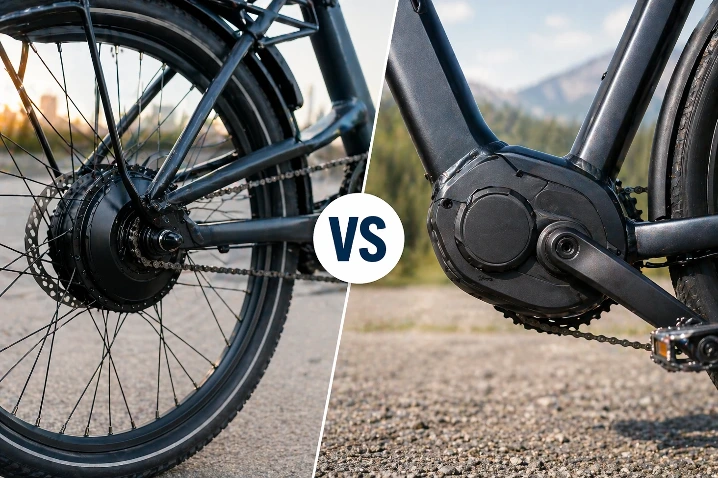
Wheel motor or crank motor: which one to choose for your electric (cargo) bike?
Read hereHow much does it really cost to rescue an electric bike motor?
There is no single price, as the cost depends heavily on the motor and the fault.
The prices published by various European professionals do show an interesting trend. In France, some internal Bosch or Brose repairs start at around €269 to €399 depending on the generation and service. In Germany, some Bosch repairs are quoted at around €150 to €350. In Belgium, a diagnostic can cost around €30 to €65, while a specialised electrical intervention can be charged at around €85/hour. In Switzerland, diagnostics and complete services are generally more expensive, with examples exceeding 100 CHF for a diagnostic. In Denmark, BikeDoctor advertises a diagnostic starting from 499 DKK. These prices are published examples and obviously do not constitute a quote: the exact model, parts, and labour can significantly vary the bill.
The economic calculation must therefore compare three scenarios: repairing the existing motor, replacing the motor with an equivalent unit, or transforming the bike with new motorisation.
In some cases, the third scenario can be particularly interesting when the bike has a quality frame of which the owner wishes to keep the wheels, brakes, transmission, accessories, and equipment.
Should one repair or replace their electric bike motor?
The answer ultimately depends on four elements : the condition of the motor, the availability of parts, the cost of the intervention, and the value of the bike.
On a recent bike equipped with a Bosch Smart System, a Shimano EP801, or a motorisation still largely supported by its manufacturer, identical replacement often remains the simplest solution.
On an older bike, the reasoning changes. If the motor is ten years old, the battery is also aging, and several components are becoming hard to find, replacing only the motor may not solve the problem in the long term.
Conversely, a robust cargo bike, a high-end e-MTB, or a bike whose frame is still in excellent condition may perfectly justify a thorough repair or a retrofit.
It is then that refurbishment and transformation become life-extension solutions, rather than a simple repair.
What should one concretely do when an e-bike motor reaches the end of its life?
The first reflex should be to accurately note the brand and model of the motor. A simple "Bosch motor" is not enough: the generation and reference of the drive unit are crucial. One should then look for error codes, check the condition of the battery, and have an electronic diagnosis performed when the system allows.
Once the fault is identified, one should ask the repairer if the motor can be opened and repaired, or if the workshop only offers a complete unit replacement.
If the repair is possible, its cost should be compared to that of a refurbished or new motor. If the motor is truly irreparable or unavailable, then the possibility of a new motorisation should be considered.
In the case of a bike with a proprietary Bosch, Shimano, Yamaha or Brose motor, this latter solution does not simply involve installing another brand. It requires a study of mechanical and electrical compatibility and, depending on the bike, may involve a specific adapter like those offered by Save My eBike.
The end of a motor does not necessarily mean the end of the bike
The most important idea to remember is ultimately this: the lifespan of an electric bike should not be limited by that of its motor.
A bike can have an excellent frame, wheels still in perfect condition, a recent transmission, good brakes, and components that can function for many years while its motorisation reaches the end of its life.
The examples of Bosch, Shimano, Brose and Bafang show that solutions are becoming increasingly numerous. Manufacturers are developing service networks, some offer refurbishment, while a new generation of independent workshops has specialised in the internal repair of motors.
In parallel, retrofitting opens a new avenue: no longer considering the original motor as a part that condemns the bike when it becomes irreparable, but as a component that can sometimes be replaced by another architecture.
This is the whole point of the solutions developed by Save My eBike. In certain configurations, their adapters allow for the preservation of the frame of an electric bike equipped with an old central motorisation and to give it a second life with a different motorisation.
The best reflex when faced with an electric bike motor at the end of its life is therefore not to immediately look for a new bike. First, one must diagnose, compare the cost of a repair, check the availability of a replacement motor, and then explore the possibilities of refurbishment or retrofit.
In many cases, the bike is not at the end of its life: it is simply its original motorisation that is.
FAQ – Electric bike motor at the end of its life
Can an electric bike motor be repaired?
Yes, in many cases. However, the possibility depends on the generation of the motor and the nature of the fault. Specialists particularly work on bearings, seals, belts, gears, and certain electronic components. Bosch itself indicates that some minor repairs are possible on its drive units and has a refurbishment process for certain units.
How much does an electric bike motor repair cost?
Prices vary greatly. European specialists, for example, announce repairs around €150 to €350 for certain Bosch motorisations in Germany and around €150 to €350 for certain interventions at BiciFix in Spain. In France, some specialised repairs start around €269 depending on the Bosch or Brose generation concerned.
Can a Shimano motor be replaced by a Bosch?
Not directly. The two manufacturers use different mechanical and electronic architectures. To switch from a Shimano motorisation to Bosch, a complete transformation of the system would be required, and the compatibility of the frame, battery, wiring, and controls would need to be checked.
Can a Bosch motor be replaced by a Bafang?
Not as a simple standard exchange. However, a Bosch bike can, depending on its design, undergo a complete transformation with a new motorisation. In certain configurations, a mechanical adapter may allow for the replacement of the old motor and a new electrical architecture to be implemented.
Is it worthwhile to save an old electric bike?
Yes, when the frame and components are still in good condition. This solution can be particularly relevant for cargo bikes, high-end e-MTBs, and bikes where the frame represents significant value.
What should I do if my motor is no longer available?
You should successively look for a repair, a refurbished motor, an identical replacement, or a retrofit solution. The Save My eBike adapters are particularly worth considering for certain configurations of Shimano, Brose, Yamaha, or Impulse central motors.