The electric bike market has been experiencing spectacular growth for several years. However, faced with the sometimes high prices of new electric bikes, many cyclists are now asking a simple question: is it better to buy a complete e-bike or to convert your current bike using an electric motor kit?
This solution is increasingly appealing to users, both for economic and ecological reasons.Transforming a traditional bike into an electric bike not only extends the lifespan of a bike that you already appreciate, but also provides electric assistance tailored to your actual needs.With powerful mid-drive motors, more accessible hub motors, and new conversion solutions, the choice today is immense.
However, converting a bicycle is not something to be done lightly. Not all bikes are compatible, not all conversion kits are created equal, and certain mistakes can have significant consequences for the bike’s safety, reliability, or even legal compliance. Before getting started, it is essential to understand the different types of motor systems, their advantages, their limitations, and the precautions that should be taken.
Why convert your bike into an electric bike?
The idea of transforming your bike rather than buying a new one meets several needs. For some cyclists, it is primarily a matter of budget. An electric bike conversion kit often costs much less than a new electric bike, especially when you already own a quality bike (400-1500 euros).
Other users are looking for a more customisable. By choosing your own motor, battery, and level of assistance, it becomes possible to create a bike perfectly suited to your needs. Some prioritise power for climbing or carrying loads, while others seek discreet assistance for daily commutes.
The conversion also has a clear ecological benefit. Reusing an existing bike avoids the production of a new frame and limits environmental impact. In a context where sustainability and repairability are becoming major issues, this approach is attracting more and more cyclists.
Crank motor kits: the most efficient solution
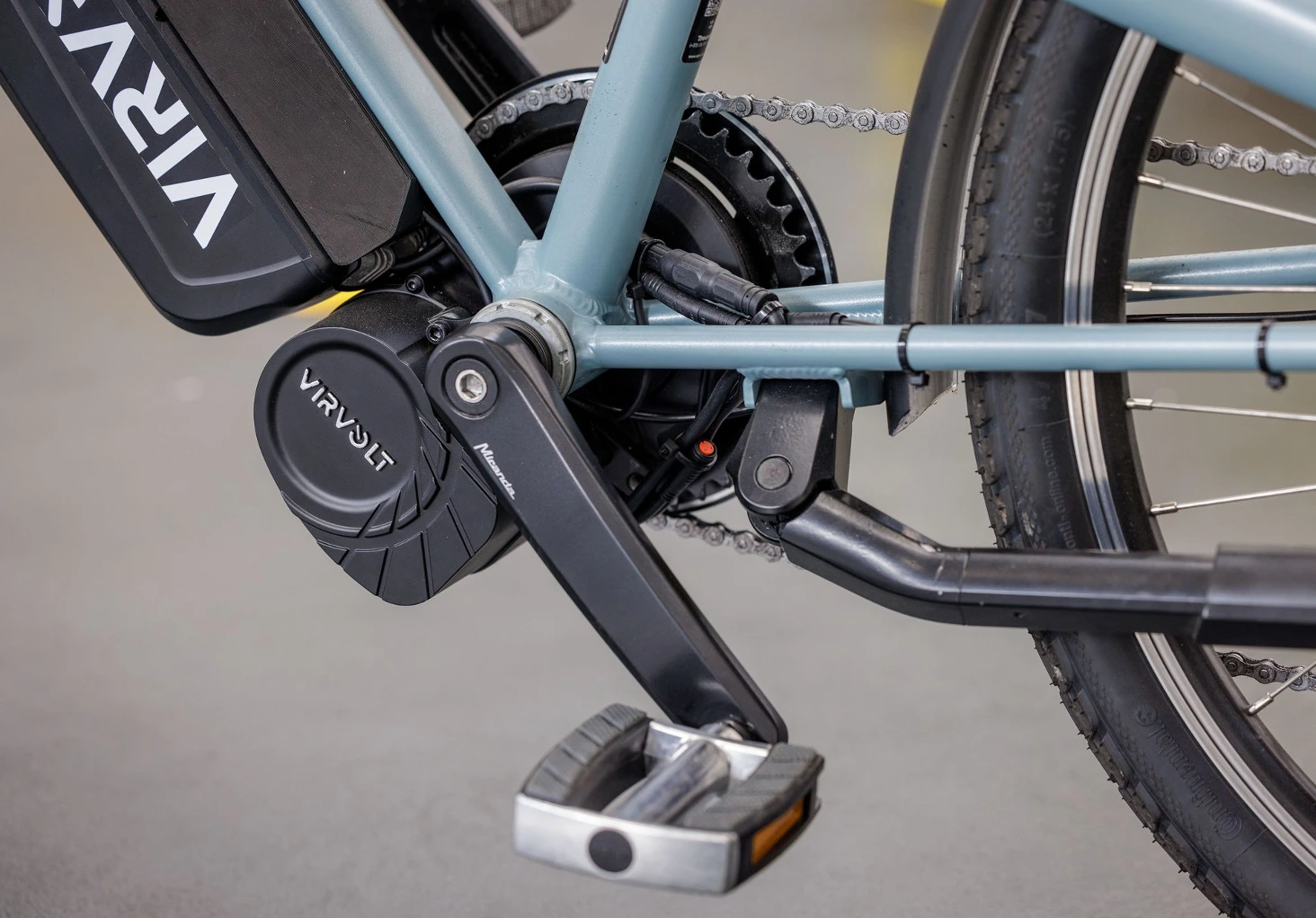
Crank motors are now considered the most effective solutions for converting a bike into an e-bike. Located at the crank, they directly use the bike's transmission and offer a more natural feeling of assistance.
The main advantage of this technology lies in themotor torque.By using the bike's gears, the motor operates more efficiently, especially when climbing or when it is necessary to carry weight. This is why this type of motorisation is particularly appreciated on cargo bikes, electric mountain bikes, or bikes intended for intensive use.
Among the most well-known brands, the motors Bafang hold a major place in the conversion market. The models BBS01, BBS02 and BBSHD are renowned for their power and robustness. They allow almost any bike to be transformed into a high-performance machine, capable of tackling significant terrain or carrying heavy loads. Their main advantage lies in their versatility, but they require careful installation and a good understanding of the settings.
The motors Tongsheng, particularly the famousTSDZ2 and TSDZ8, appeal to users looking for a more progressive assistance that is closer to the sensations of major manufacturers like Bosch or Shimano. Thanks to their integrated torque sensor, they automatically adjust the assistance to the cyclist's effort, which provides a much smoother and more natural ride..
Other French players like Virvolt or Ozo also offer highly regarded conversion kits.Virvolt and Syklo focus on a more high-end approach based on Tongsheng technology and more integrated, with systems designed to provide an experience close to that of an original electric bike. Ozo, for its part, is recognised for the quality of its kits. Bafang and its technical support, particularly for users wishing to convert cargo bikes or touring bikes.
Finally, brands like ANNAD are developing more accessible motors, often aimed at urban use or everyday bikes.
Hub motors: a simpler and more economical solution
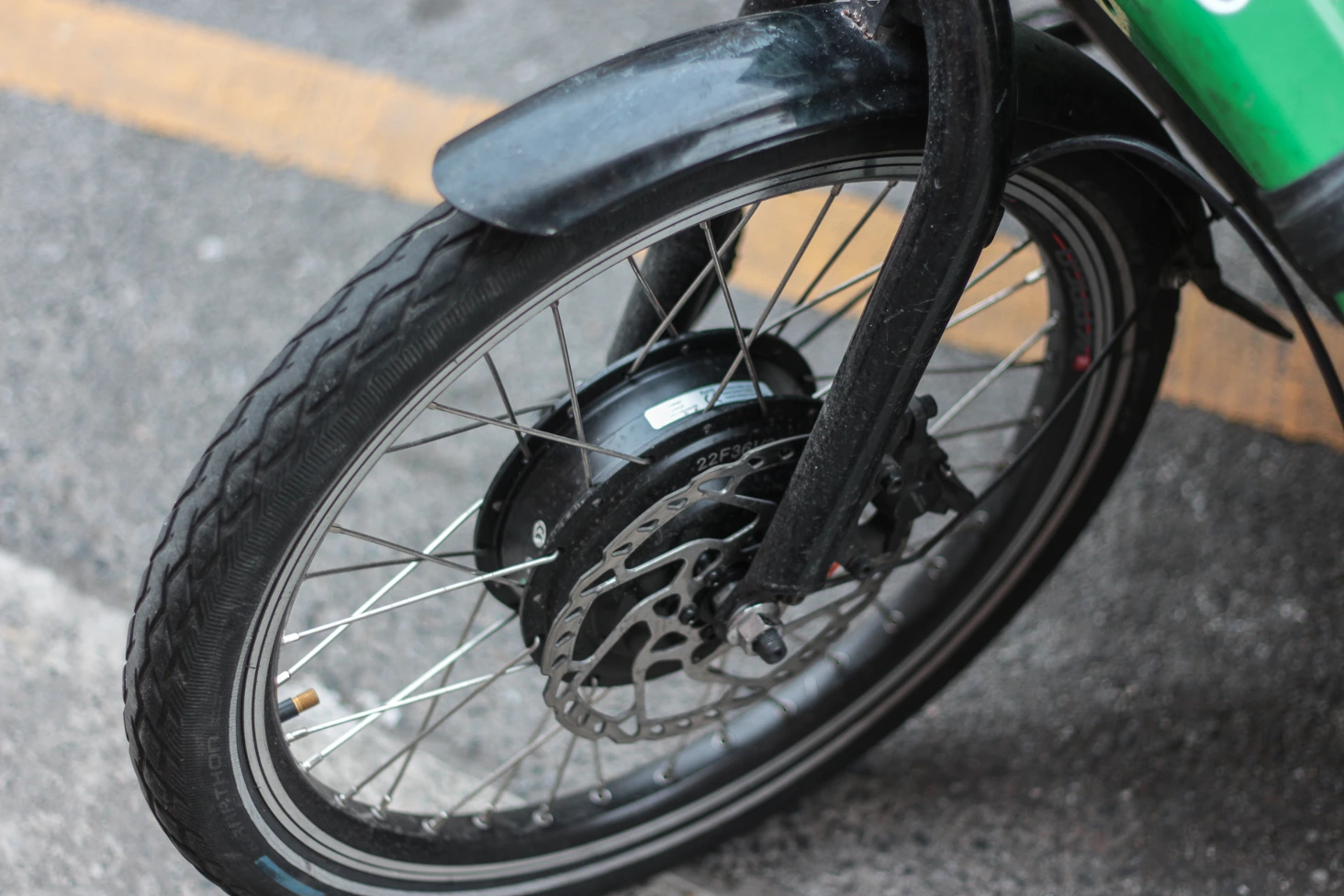
Alongside crank motors, hub motors represent the other major family of electric kits. Here, the motor is directly integrated into the hub of the front or rear wheel. This technology is generally simpler to install and more affordable.
Front hub motors often appeal to beginner users, as they allow for a quick conversion of a bike without interfering with the transmission. They provide a decent level of assistance for urban use or relatively flat journeys. However, their behaviour may seem less natural and they show their limits on steep climbs or under heavy load.
Rear hub motors generally offer better sensations and improved traction. They are often more powerful and better suited for intensive use. Manufacturers like Bafang, MXUS, or Shengyi now offer very high-performance hub motors, capable of effectively transforming a traditional bike.
However, hub motors also have certain limitations. Since they do not operate through the drivetrain, they use energy less efficiently when climbing hills. They can also generate more heat under heavy load. For a cargo bike or a bicycle used on hilly terrain, a mid-drive motor is generally the more suitable option.
Key Considerations Before Converting Your Bicycle
Converting a bicycle into an electric bike requires careful consideration. The first essential point concerns frame compatibility. Not all bicycles can accommodate every type of motor. For example, a mid-drive motor requires a compatible bottom bracket, while a hub motor imposes certain constraints regarding axle standards and braking systems.
The weight of the bicycle and its intended use must also be taken into account. A bike designed to carry children or heavy loads will require a more powerful, high-torque motor and a suitable battery. Conversely, light urban use may only require a more discreet and cost-effective motor.
The quality of the installation also plays a fundamental role. A poorly installed kit can lead to electrical issues, premature wear, or safety risks. Cable routing, component tightening, and drivetrain adjustment must all be carried out with care.
Regulations: What the Law Says About Electric Bike Conversion Kits
Regulations are a key consideration when it comes to electric bike conversions. In Europe and France, a legally compliant electric bicycle must meet several specific requirements.
Assistance should only operate when the cyclist is pedalling, the nominal power of the motor must be limited to 250 watts, and assistance must cut off at 25 km/h.. If these limits are exceeded, the bicycle changes category and can be considered a moped.
This then implies additional obligations such as registration, insurance, wearing an approved helmet, and sometimes even a specific licence. Many powerful kits available online far exceed these limits, which can expose the user to penalties or issues in the event of an accident.
It is therefore essential to choose a configuration that complies with the intended use and local regulations.
Battery, range, and maintenance: often underestimated elements.
When converting a bicycle, the motor is only part of the equation. The choice of the battery directly influences the range, weight, and behaviour of the bicycle.
A poor-quality battery can significantly reduce the performance and reliability of the system. In contrast, a well-sized battery allows for stable and lasting assistance.
The maintenance of the bicycle also becomes more important after conversion. The transmission undergoes more stress, especially with powerful crank motors. A worn or poorly maintained chain can quickly cause mechanical problems.
Can an existing electric bicycle be converted?
A question that is increasingly being asked is: is it possible to replace the original motor of an electric bicycle with a conversion kit?
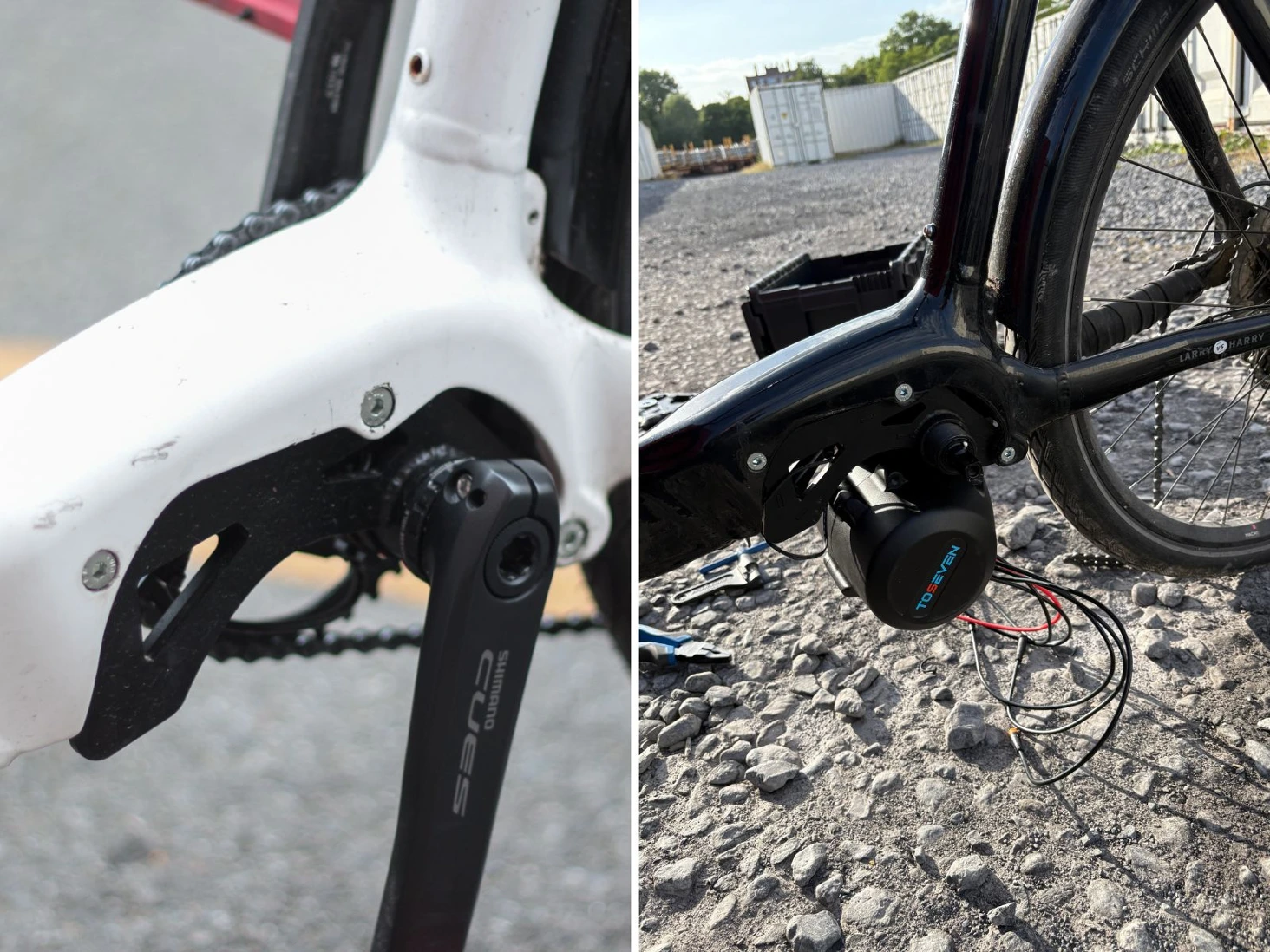
The answer is yes, but it remains technically complex. Motors from major brands like Bosch, Shimano or Brose operate within proprietary ecosystems where the motor, battery and electronics communicate with each other.
This is where solutions like the adapters offered by Save My eBike. These systems allow for the replacement of a faulty proprietary motorisation with a more standard motor, such as a Bafang or a Tongsheng, while adapting the existing frame.
This approach opens up new possibilities for users facing costly breakdowns or the obsolescence of certain systems.. Rather than completely replacing the bike, it becomes possible to give it a second life with a more accessible and repairable motorisation.
What is the price of an electric bike motor kit?
The price of a conversion kit for an electric bike can vary greatly depending on the type of motor, the quality of the components, the desired power and the level of integration required. Between a simple solution for occasional urban use and a high-end motorisation capable of equipping a cargo bike or a powerful mountain bike, the price differences are significant.
The most accessible kits are generally front wheel motors. Today, entry-level kits can be found between €300 and €600, often consisting of a motorised wheel, a controller, a basic display and a small battery. This type of solution is mainly suitable for relatively flat urban journeys and for users seeking simple assistance without a high power requirement.
Rear hub motors are generally a bit more expensive. Depending on the battery capacity and the quality of the motor, prices are usually between 500 and 1000 €. They often offer better performance and a more pleasant ride, especially on more dynamic bikes or for intensive daily use.
Mid-drive motor kits currently represent the most sought-after but also the most technical segment. The Bafang, very popular for their power and versatility, generally start around 500 to 900 € with battery. More powerful versions or those equipped with large batteries can easily exceed 1500 €.
The Tongsheng TSDZ2 or TSDZ8 motors often fall within a similar range, usually between 400 and 1300 € depending on the chosen battery. Their main advantage lies in their torque sensor, which provides a more natural assistance, similar to the sensations of a Bosch or Shimano.
On the side of French solutions like Ozo or Virvolt, prices are generally a bit more expensive. This difference is explained by the quality of the components, technical support, and the level of integration. For a well-equipped complete kit, you often need to budget between 1200 and 2500 €.
For specific uses like cargo bikes or heavily used mountain bikes, budgets can increase further. A high-capacity battery, a very torquey motor, and reinforced components represent a significant investment, but also a much more durable solution suited for intensive use.
It is also necessary to take into account the cost of assembly if the installation is carried out by a professional. Depending on the complexity of the bike and the kit, labour costs can vary between 100 and 400 €. For some electric bikes requiring specific adapters, particularly with the solutions offered by Save My eBike, the overall budget will also depend on the type of conversion and the motor chosen.
Ultimately, converting your bike is generally less expensive than buying a new electric bike of equivalent quality. A good new e-bike equipped with a central motor often exceeds 2500 to 4000 €, or even much more for a cargo bike or a high-end mountain bike. Therefore, conversion allows you to obtain a high-performance bike while retaining a frame that is already appreciated and often better equipped than some entry-level models.
Conclusion: should you convert your electric bike?
Electric conversion today represents a genuine alternative to purchasing a new e-bike.Thanks to the numerous kits available on the market, it is possible to transform almost any bike into a high-performance electric bike tailored to your needs.
The choice between a mid-drive motor and a hub motor will primarily depend on the intended use, budget, and level of requirement. Bafang, Tongsheng, Virvolt, Ozo, Syklo, or ANNAD motors each offer different approaches, ranging from pure performance to natural assistance or ease of installation.
But beyond the technical choice, successfully completing your conversion requires a good understanding of the mechanical, electrical, and regulatory constraints. A thoughtful and well-executed installation not only allows for a high-performance bike but also one that is durable and repairable over time.
And thanks to new adaptation solutions, even some proprietary electric bikes can now be converted and modernised, paving the way for more sustainable and scalable mobility.