Why change the motor of an electric bike?
The motor is the central element of an electric bike. It transforms the cyclist's effort into additional power and directly affects the comfort, performance, and longevity of the bike. However, like any technical component, it can eventually show signs of weakness. A loss of power, assistance cut-offs, or unusual noises are often the first warning signs.
In some cases, the failure is sudden, especially after several thousand kilometres or following a shock, water infiltration, or an electronic fault. But it can also happen that the motor is simply overwhelmed by the user's needs.
Diagnosing before replacing: an essential step
Before considering a motor change, it is essential to ensure that the problem indeed comes from it. On an electric bike, failures are often related to peripheral elements such as the battery, sensors, or electrical connections. A motor that no longer activates is not necessarily out of service; it may simply no longer be receiving the necessary information to function.
A precise diagnosis helps avoid unnecessary expenses. In many cases, a simple sensor replacement or a connection repair is enough to get the bike back in working order. It is only when the motor is actually defective, or when its repair is not economically viable, that replacement becomes relevant..
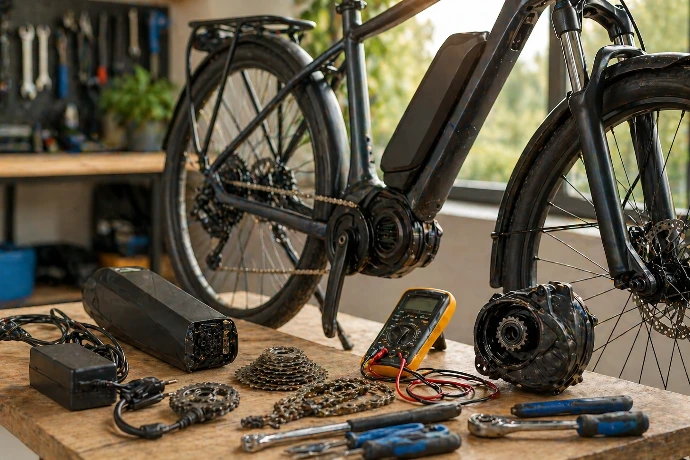
READ: My electric bike is broken: what to do? Complete guide
READThe different types of motors and their replacement
Not all electric bike motors are replaced in the same way.. The type of motorisation plays a decisive role in the complexity of the intervention.
The motors integrated into the wheel, often called hub motors, are generally the easiest to replace.. They come in the form of a complete wheel or a kit, and their installation does not require significant modifications to the bike. This type of replacement is particularly suitable for urban bikes or conversions.
The central motors, located at the bottom bracket, offer better performance but are more complex to replace.. They are often integrated into the frame and linked to proprietary electronic systems. In the case of major brands, replacement may require specific tools and a visit to an authorised workshop.. This also involves a higher cost, which can sometimes approach that of a new bike..
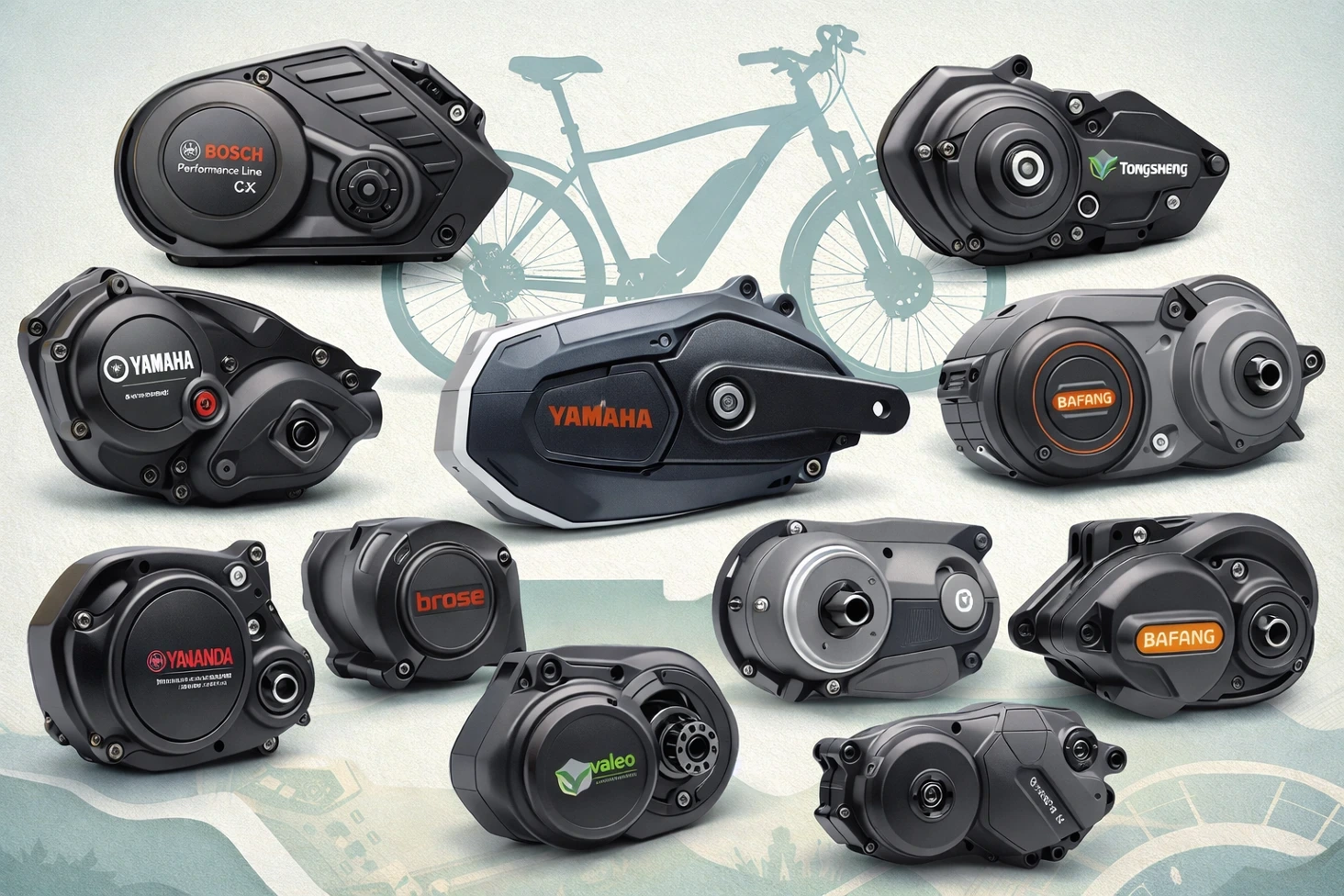
A special case: that of the external crank motors such as Bafang or Tongsheng (Z3, Z8), which are very repairable and easily removable..
How much does it cost to replace an electric bike motor?
The cost of a motor replacement depends on many factors, including the brand, the technology and the availability of parts. On a bike equipped with a proprietary motor, the replacement can reach several hundred euros, or even exceed a thousand euros for high-end systems.
Labour costs are often added to this, especially if the intervention requires electronic diagnostics or reprogramming.This cost can quickly become prohibitive, particularly for a bike out of warranty..
It is precisely in this context that new solutions are emerging, aimed at making repairs more accessible and sustainable.
Examples of replacements according to major motor brands
In practice, not all electric bike motors are equal in terms of repairability and replacement. Each manufacturer develops its own ecosystem, with specific technical constraints that directly influence the possibilities for intervention.
Case of Shimano motors
Shimano Steps motors, such as the EP8 or E6100, are very common on modern e-bikes. They are known for their reliability, but when a failure occurs, the repair is often limited. Shimano operates with a closed electronic system., which means that diagnostics and updates require proprietary tools.
In a specific case, a user with a faulty Shimano motor out of warranty generally faces a complete replacement of the motor unit. The cost can be high, and compatibility requires sticking with an identical or very similar Shimano motor.
It is then necessary to get in touch with the bike manufacturer or an authorised Shimano centre to initiate a customer service procedure.
Case of Bosch motors
Bosch motors, particularly the Performance Line and Cargo Line ranges, are among the most widely used on the market. They offer excellent performance, but their main drawback lies in their completely locked ecosystem..
In reality, replacing a Bosch motor almost always involves going through an authorised network.. The motor is linked to the battery, the display, and the controller. A replacement outside the network is extremely complex, if not impossible without specific tools.
Concrete example: A Bosch HS motor on a cargo bike can cost between €800 and €1200 to replace, with no directly compatible alternative.
Case of Brose motors
Brose motors, often used on high-end bikes, provide very natural assistance. However, like Bosch and Shimano, they remain proprietary.Their repair is sometimes possible, but it heavily depends on the model and the fault.
In some cases, some specialised workshops can intervene on internal components (for example, changing the internal belt), but this remains limited. Replacement is often the simplest solution, although costly.
The eVTT workshop is particularly specialised in their after-sales service.
Case of Yamaha motors
Yamaha motors are renowned for their robustness and high torque. They are often used on sports bikes or electric mountain bikes. In terms of replacement, the logic is similar to other major brands: limited compatibility and dependence on the manufacturer.
A defective Yamaha motor generally needs to be replaced with an equivalent model, which restricts options for the user.
Case of Impulse motors
Impulse motors, found on some older ranges of bikes, such as Kalkhoff ones, perfectly illustrate the problem of obsolescence. When a motor fails, spare parts can sometimes be difficult to find.
A user with an Impulse 2.0 motor may find themselves without an official replacement solution, due to the unavailability of parts and motors: the brand having ceased production of motors...
It is precisely in this type of situation that alternative solutions make perfect sense.
Can a Shimano motor be replaced by a Bosch (or another brand)?
This is an essential question, and the answer is clear:
No, it is not possible to directly replace a Shimano motor with a Bosch, or vice versa.
And this is for several major technical reasons.
Why are the motors not interchangeable?
Electric bike motors are not universal components. Each manufacturer designs a complete system, in which all elements are interdependent.
A closed electronic ecosystem.
Each motor is associated with:
- a specific battery,
- a dedicated display,
- a proprietary controller,
- internal software.
These elements communicate with each other using protocols specific to each brand.
As a result, a Bosch motor cannot communicate with a Shimano battery, and vice versa.
A specific mechanical integration.
Beyond the electronics, the physical integration of the motor is also a major obstacle.
- The mountings are not the same,
- the frames are designed for a specific motor,
- the alignment of the transmission varies.
It is therefore impossible to install a motor from another brand without profoundly modifying the bike.
Deliberately locked systems.
Manufacturers have also chosen to lock their systems to:
- guarantee safety
- manage customer service
- avoid uncertified modifications
This greatly limits the possibilities for adaptation.
The solution: bypass proprietary systems
In the face of these limitations, solutions like those offered by Save My eBike allow for circumventing these constraints. permettent de contourner ces contraintes.
Rather than replacing a motor with a proprietary equivalent, the idea is different:
Replace the entire system with a compatible alternative motorisation via an adapter.
Specifically, this means that one does not replace a Shimano with a Bosch, but rather installs a new motor (often a non-intrusive electrification kit) in place of the old one, thanks to a suitable interface.
One can also choose to install a crankset instead and not electrify the bike. Or electrify it with a wheel motor. In short, the choices are numerous.
Let's take a real case:
A bike equipped with an Impulse or Shimano motor becomes unusable due to a motor failure out of warranty. The original replacement is too expensive or impossible.
👉 With an adapter:
- the original motor is removed
- the correct adapter is installed
- an alternative motor (e.g., Tongsheng or Bafang) or a standard crankset is installed
- the electronic system is replaced
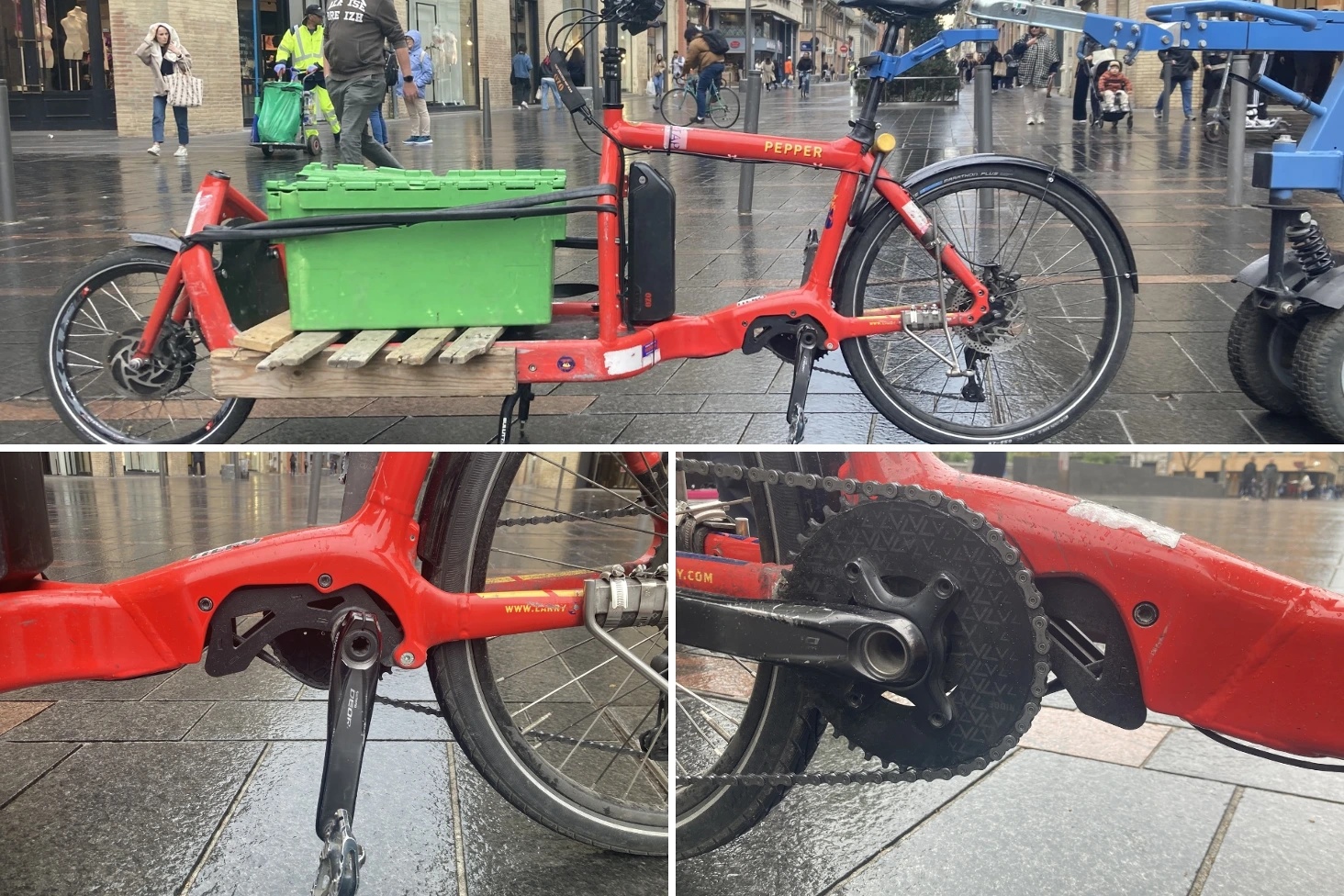
This solution has several advantages. It first allows for reducing considerably the cost of repair, avoiding the purchase of an often expensive proprietary motor. It also offers a greater freedom in the choice of motorisation, which can be an opportunity to improve the performance of the bike or adapt it for a new use.
But beyond the economic aspect, this approach is part of a logic of sustainability. Rather than replacing an entire bike due to a faulty motor, it becomes possible to extend its lifespan by only replacing the affected component.This addresses a growing issue in the electric bike sector, where repairability has become a major challenge.
Mistakes to avoid when changing the motor
Changing the motor of your electric bike is not something to improvise. One of the most common mistakes is to neglect compatibility between components. An unsuitable motor can lead to malfunctions, or even damage the bike.
It is also important not to underestimate the importance of the initial diagnosis. Replacing a motor when the fault comes from another element is a costly and unfortunately common mistake. Finally, the quality of the installation plays a crucial role. A poor installation can compromise the safety and durability of the bike.
Conclusion: replacing your motor, a sustainable and relevant solution
Changing the motor of your electric bike may seem complex, but it is often a relevant solution to extend the lifespan of your equipment. With a good understanding of the system and an accurate diagnosis, it is possible to give your bike a second life, while improving its performance.
Solutions like the Save My eBike adapters open up new perspectives by making replacement more accessible, economical, and sustainable.They allow you to free yourself from the constraints of proprietary systems and to evolve your bike according to your needs.
In a context where sustainable mobility is becoming increasingly important, knowing how to repair and adapt your electric bike becomes a real advantage.Rather than replacing, it is now possible to transform and optimise, for a more responsible and sustainable practice.