Electric bike breakdown: a common situation but often repairable
The electric bike (e-bike) is a concentration of technology combining classic mechanics and advanced electronics.
As a result: when a breakdown occurs, it may seem complex… but it is often identifiable and sometimes simple to resolve.
According to industry professionals, the majority of breakdowns concern:
- the battery
- the electrical connections
- the sensors
- or the motor
Good news: with a good diagnosis, it is possible to repair quickly without replacing the whole bike.
The most common breakdowns on an electric bike
1. The electric bike battery is faulty
This is the number 1 breakdown on e-bikes.
The electric bike battery is the most stressed component and also the most exposed to wear. Over time and with charge cycles, it gradually loses capacity, resulting in reduced range, sudden cut-offs, or an inability to charge properly.
In the majority of cases, a battery that seems faulty is not completely out of service. The problem may stem from a faulty charger, dirty connectors, or an internal cell imbalance. Over time, lithium-ion batteries naturally lose capacity after 500 to 800 charge cycles. This is why an accurate diagnosis is essential before considering a replacement.
When the battery is truly at the end of its life, several solutions exist: replacement with a new one, refurbishment or optimisation of usage habits to extend its lifespan. Indeed, a well-maintained battery — stored at the right temperature and charged correctly — can last several years without major issues.
In summary, a battery failure is common but rarely definitive, and it can often be anticipated or corrected with the right maintenance habits.
Solutions:
- check the charger
- check the connectors
- test another battery
- consider refurbishment
Note that improper use (storage when empty, heat, cold) accelerates degradation.
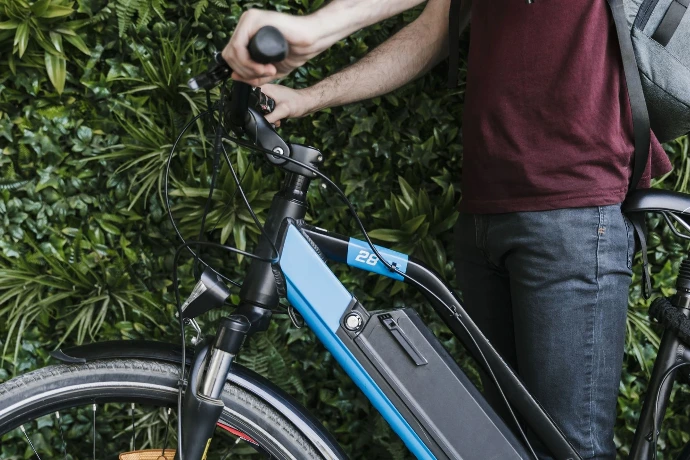
To go further: Why is my electric bike battery not working?
READ2. The motor is not working
The electric bike motor is one of the most reliable components of an e-bike, but when it fails, the consequences are immediate: no assistance, loss of power, or erratic behaviour. In most cases, the problem does not come directly from the motor itself, but rather from its electronic environment.
Indeed, a motor that is not working may be related to a faulty or discharged battery (very common: be sure to check the battery charge), a faulty sensor (speed sensor, torque sensor, Hall effect sensor...), or a connectivity issue.. These elements prevent the motor from receiving the necessary information to activate properly. That is why it is essential to start with a comprehensive diagnosis before concluding a motor failure.
When the motor is indeed the issue, the situation depends on the type of motorisation. The central motors from major brands are often sealed and difficult to repair, which means a complete replacement, sometimes costly. In contrast, some more accessible motors or those from kits can be repaired or replaced more easily.
In any case, a motor failure does not necessarily mean the end of the bike.Solutions exist today to extend its lifespan, particularly by replacingthe motor or opting for more repairable alternative systems.
Solutions:
The first things to do are to:
- contact the after-sales service of the bike and motor brand
- check the connections (visually and by ensuring that all cables are properly connected)
- restart the system (if possible: refer to the manual)
- check the indicators
- perform cross-tests if possible (another battery, another display, another speed sensor...)
- contact a professional or authorised centre for your motor.
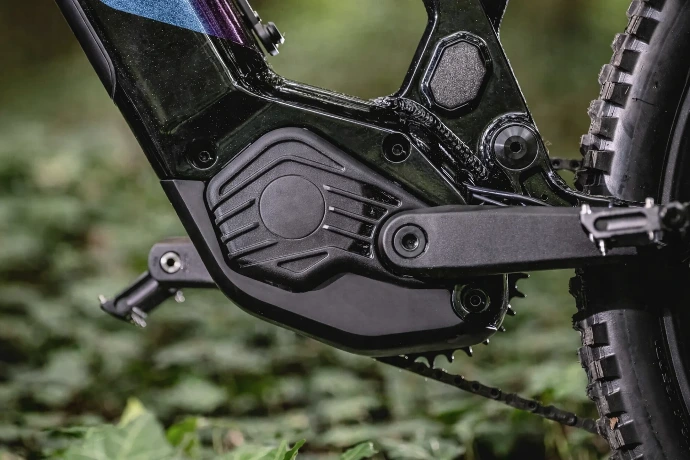
To go further: What to do if the motor of my electric bike is no longer working?
READElectrical and electronic problems
Electrical and electronic issues account for a significant share of failures on an electric bike. Unlike visible mechanical components such as the chain or brakes, these malfunctions are often more difficult to identify, as they can be intermittent, invisible, or involve multiple components at once.
An electric bike relies on a complex electronic ecosystem: battery, controller, motor, sensors, display, and wiring harness. All these elements communicate with each other continuously. Therefore, it only takes a fault in a single component to disrupt the entire system.
In practice, the most common problems are related to electrical connections. Over time, vibrations, humidity, or temperature variations can cause an oxidation of the connectors or a poor contact. This type of failure can lead to sudden cuts in assistance, a motor that goes into safety mode or a display that turns off for no apparent reason. It is often a frustrating failure, as it can appear randomly.
The damaged cables also constitute a frequent cause. On an electric bike, the cables generally run along the frame or near areas of friction. A damaged sheath, a pinched or severed wire can interrupt the transmission of information between the components. In some cases, this results in irregular assistance; in others, the motor does not activate at all.
The sensors, particularly the pedal or torque sensor, also play an essential role in the functioning of the electric bike. When they fail, the bike may no longer detect the cyclist's effort. The result: the assistance does not engage or operates inconsistently. This type of failure is often confused with a motor problem, whereas it is actually a signal defect.
Finally, one should not overlook the electronic or software bugs. Modern electric bikes are equipped with computer systems that may require updates. An outdated or corrupted firmware can cause malfunctions, such as a loss of assistance, error messages displayed on the screen, or abnormal motor behaviour. In this case, a visit to a workshop for an update or an electronic diagnosis is often necessary.
What is important to remember is that electrical failures on an electric bike are not necessarily serious, but they require a methodical approach. Before considering an expensive replacement of the motor or battery, it is essential to check all connections., the condition of the cables and the proper functioning of the sensors. In many cases, a simple intervention on a connector or an electronic component is enough to get the bike back in working order.
In summary, even if these breakdowns may seem complex, they are often related to simple and accessible elements. A good understanding of the electrical system of one's e-bike not only allows for a better understanding of the symptoms but also helps to avoid unnecessary or costly repairs.
⚠️ Common breakdowns:
- oxidised connectors
- cut motor cable
- faulty display
- malfunctioning pedal sensor
👉 These breakdowns often cause:
- irregular assistance
- sudden cuts
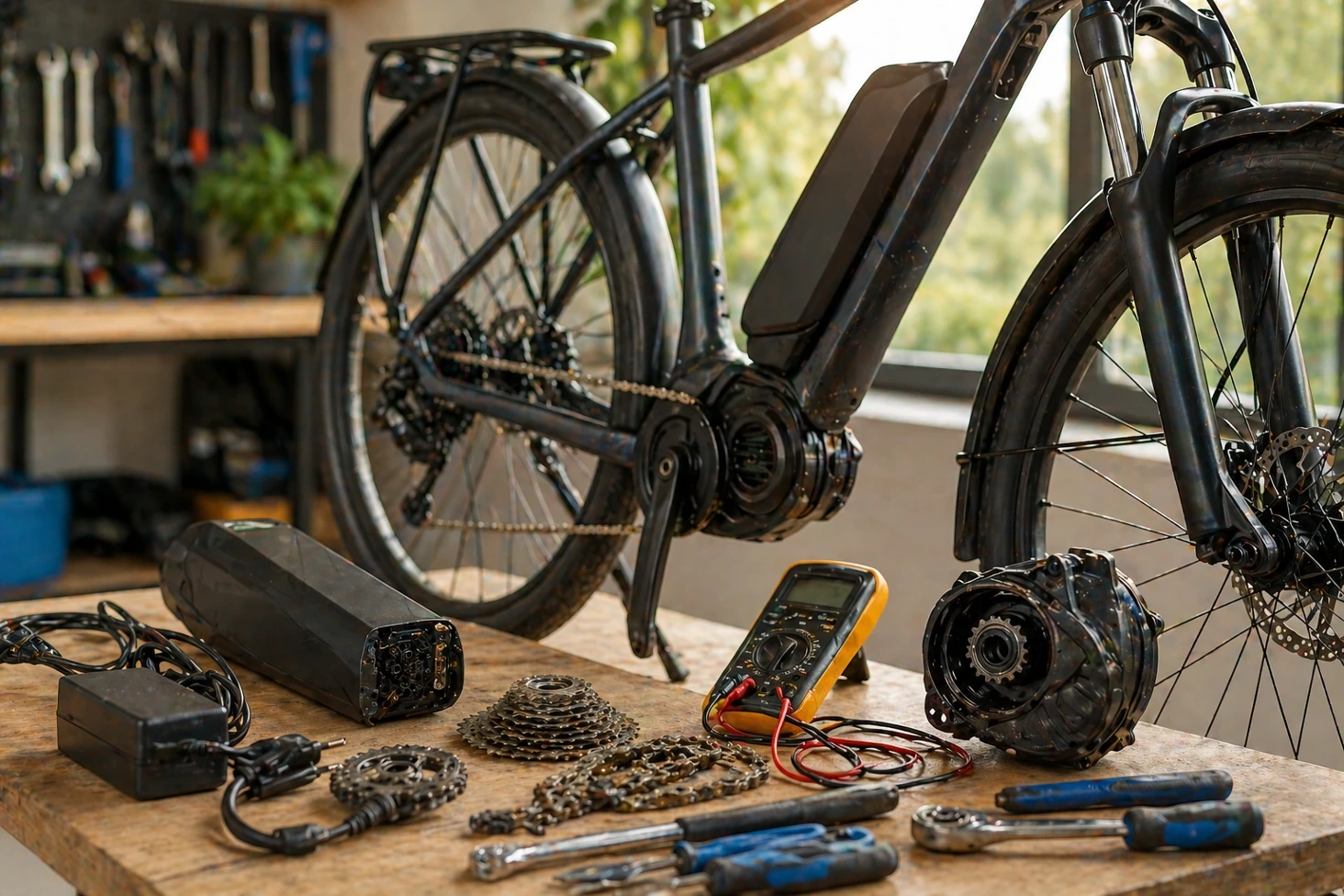
4. Transmission and mechanical wear on an electric bike
Beyond electronic components like the battery or motor, the mechanical transmission plays a fundamental role in the proper functioning of an electric bike. Yet, it is often one of the most underestimated aspects when a breakdown occurs. Many users immediately think of a motor problem, while the real cause may stem from advanced wear of the chain, cassette, or chainring.
An electric bike, especially when equipped with a crank motor, undergoes much more significant stress than a conventional bike. The motor amplifies the cyclist's effort, which exerts additional pressure on the entire transmission. Result: the components wear out more quickly, sometimes twice as fast as on a non-electric bike.
Over time, a worn chain loses precision and can cause gear skipping or a jerky feeling while pedalling.The cassette, for its part, can slightly deform, making gear changes less smooth and noisier. These signs are often gradual, making them difficult to detect at first. However, they have a direct impact on the bike's performance and can be mistaken for a motor failure.
It is also common for a poorly maintained transmission to lead to a loss of overall efficiency.The cyclist has to exert more effort, the motor compensates more, and this can give the impression that the bike is “not working as well.” In some cases, this can even lead to excessive battery consumption or overloading the motor.
On a cargo bike, these phenomena are even more pronounced.The weight carried, often high, exacerbates the wear of mechanical components. A chain that would still be functional on a standard bike can quickly become ineffective on a loaded cargo bike. That’s why regular maintenance of the transmission is essential to avoid more significant failures.
In practice, a worn transmission does not completely block the bike, but it significantly degrades the riding experience.It can also, over time, damage other components if not replaced in time. Therefore, it is an important point of vigilance that should not be overlooked in diagnosing a faulty electric bike.
In summary, before suspecting an electronic failure, it is always relevant to check the condition of the transmission. In many cases, a simple replacement of the chain or cassette is enough to restore optimal functioning of the bike.
Maintenance: the best way to avoid breakdowns
Electric bike motor manufacturers all emphasise one essential point: regular maintenance helps to avoid a large part of the breakdowns. This starts with simple actions, such as cleaning the bike without using a high-pressure jet, which could damage the electronic components.
The battery should also be used in good conditions, avoiding extreme temperatures and complete discharges. As for the transmission, it should be regularly cleaned and lubricated to limit wear. These good practices, often neglected, have a direct impact on the lifespan of the bike.
The electronic aspect should not be forgotten either. Software updates, when available, can improve performance and correct certain malfunctions. A periodic visit to the workshop can thus prevent more significant problems in the long term.
Tips
🧼 1. Cleaning the bike
- clean regularly
- avoid high-pressure jets
- remove battery and screen before washing
👉 Water is a major enemy of electronic components
🔋 2. Battery maintenance
- maintain between 20% and 80%
- avoid complete discharges
- store between 10°C and 20°C
👉 A well-maintained battery lasts much longer
⚙️ 3. Transmission and mechanics
- clean and lubricate the chain
- check for wear every 1000–1500 km
- adjust the gears
👉 Central motors wear the transmission more quickly
🧠 4. Electronic updates
- update the firmware
- have it diagnosed in a workshop
👉 Updates fix bugs and improve performance
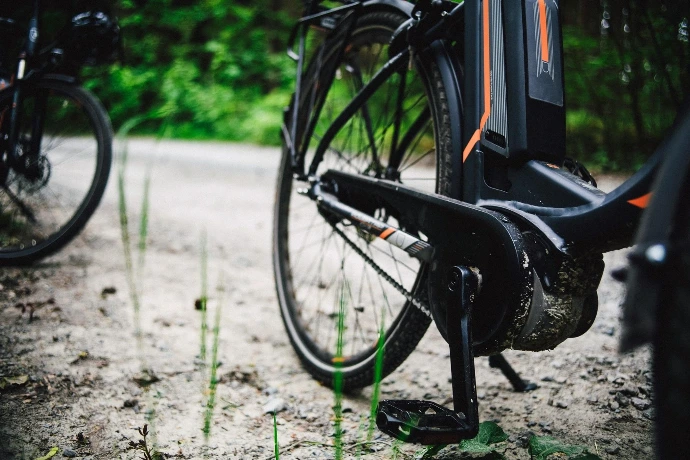
Maintenance of an electric bike: recommendations from motor manufacturers
To learn more, read our article on recommendations from electric bike motor manufacturers.
READRepair or replace: a strategic question
In the event of a breakdown, the question of replacement arises quickly. Should one repair or completely change a component, or even the entire bike? The answer depends on the type of breakdown, but also on the cost and availability of parts.
In many cases, a simple repair is enough to get the bike back in shape. But when the motor or battery is involved, costs can quickly escalate. This is where alternative solutions make perfect sense.
Today, it is possible to replace a proprietary motor with a standard motor thanks to specific adapters, like those offered by Save My eBike. This approach allows for extending the lifespan of the bike while reducing costs, especially when the original model is no longer supported by the manufacturer.
How much does an electric bike breakdown cost?
🔧 Average observed costs
- diagnosis: €30 to €60
- electrical repair: €50 to €150
- battery: €400 to €800
- motor: €600 to €1200
👉 Costs vary greatly depending on the brand and technology.
⚠️ Mistakes to avoid
❌ waiting for the breakdown to worsen
❌ using a high-pressure jet
❌ storing the battery empty
❌ ignoring weak signs (noises, cuts)
Alternative: replace your motor with an adapter to retrofit the e-bike
Our adapters allow you to replace a faulty motor with a standard motor if all the solutions offered by repairers and after-sales services do not suit you. Or if you want to change the type of motorisation, free your bike, save it.
✔️ Advantages:
- avoid throwing away the bike
- reduce costs
- extend lifespan
👉 This notably allows you to:
- replace a proprietary motor
- switch to a more repairable motor (e.g., Tongsheng, Bafang)
💡 Concrete example
A bike with a Shimano HS motor:
- classic replacement → £800 to £1200
- adapter solution → £144 + electrical kit (optional)
👉 particularly interesting solution out of warranty
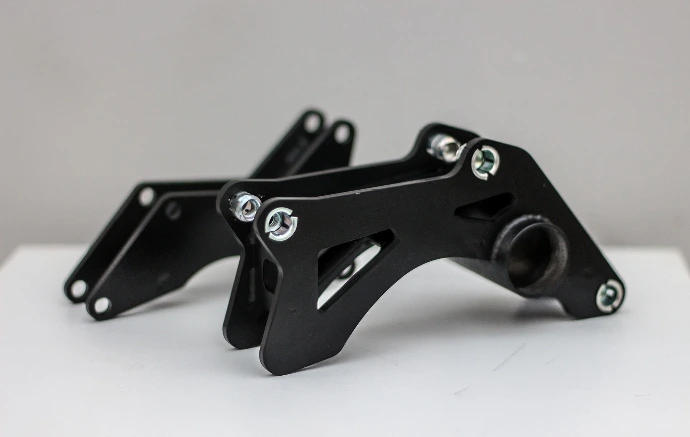
Discover our adapters
Shimano, Brose, Bosch, Impulse... find our replacement adapters for broken electric bike motors in our shop.
Our adaptersConclusion: a breakdown is not a fatality
An electric bike breakdown is not necessarily destined for the scrap heap. On the contrary, most problems can be identified and resolved with a methodical. By understanding the overall functioning of the e-bike and adopting good maintenance practices, it is possible to avoid many breakdowns and significantly extend the lifespan of the equipment.
Rather than giving in to the temptation of systematic replacement, it is often more relevant to seek to repair or adapt your bike. This approach is not only more economical but also more sustainable. In a context where electric mobility is becoming increasingly important, learning to maintain and repair your bike becomes a real asset.