Introduction: two technologies, two riding experiences
When choosing an electric bike (e-bike)or an electric cargo bike, one question always arises:
👉 should you choose a hub motor (front or rear)or a mid-drive motor (central) ?
These two technologies offer completely different sensations, performances, and uses.
👉 In summary:
- hub motor = simplicity and price
- mid-drive motor = performance and natural feel
But in reality, the choice mainly depends onyour usage (city, cargo, mountain, budget).
1. The hub motor: simple, accessible, and effective in the city
Operation
The hub motor, also called a hub motor, is integrated directly into:
- the front wheel → traction
- the rear wheel → propulsion
It generally works with a pedal rotation sensor: as soon as you pedal, engage the cranks, the motor activates consistently (the "electric moped" effect).
There are also some models, like the rear wheel motors from Actia, Doga and Virvolt, which are equipped with torque sensors at the bottom bracket or freewheel to reproduce a more "natural" pedalling sensation, similar to central crank motors. Assistance is activated when you need it, not when the cranks are in motion.
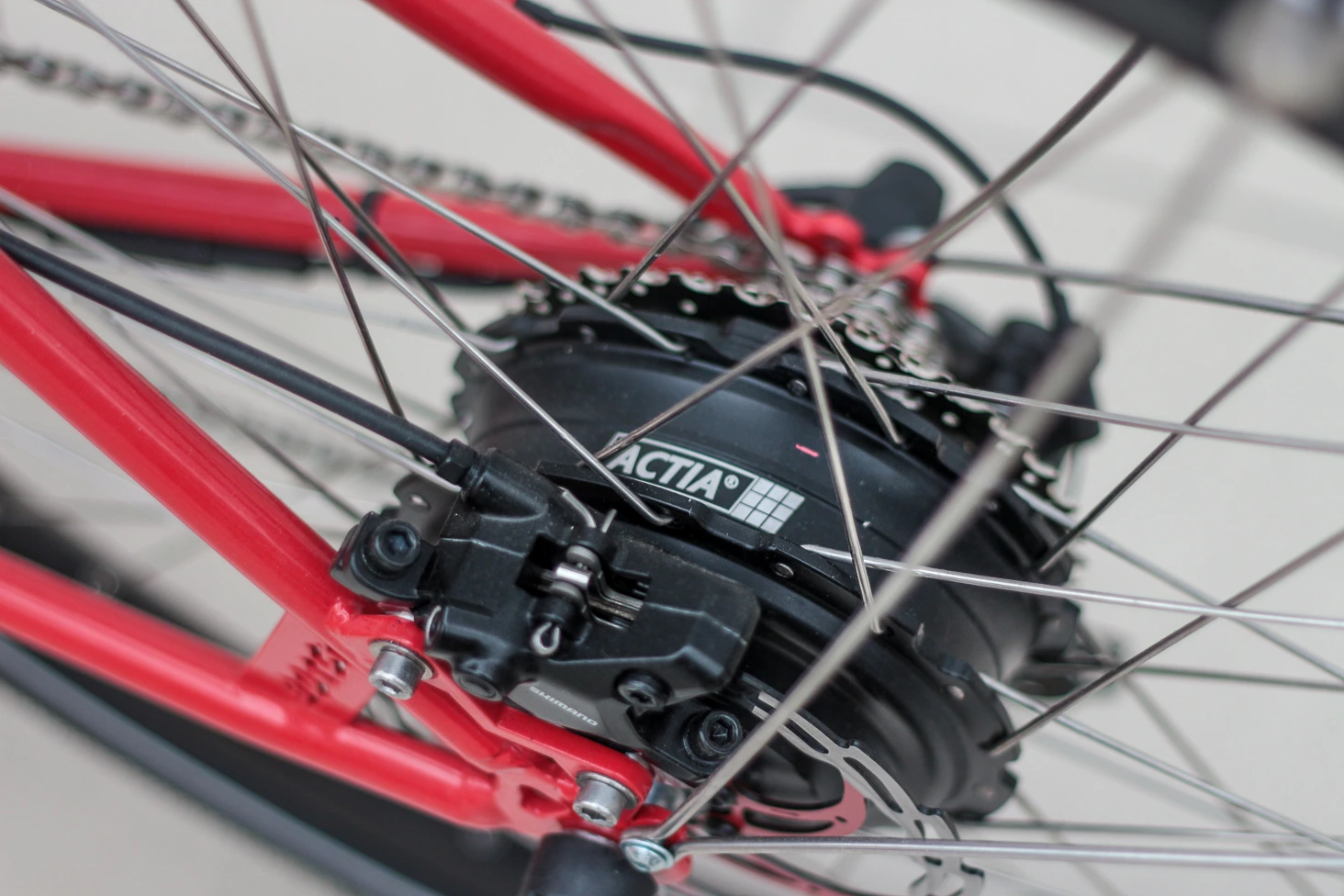
✔️ Advantages of the wheel motor
- Affordable price→ ideal for entry-level
- Simple installation→ perfect for conversion
- Reduced maintenance
- Suitable for city and flat terrain
- Very easy to change, unlike central motors
👉 Wheel motors are often found on:
- urban electric bikes
- Bafang, OWURU, OZO or MXUS kits
- Decathlon bikes
❌ Disadvantages of the wheel motor
- less efficient uphill: less torque (40-60 n.m)
- poor weight distribution on some models
- less natural feel with the pedalling sensor
- can make small maintenance tasks, like a flat rear inner tube, very tedious due to disassembly
Examples of bikes with wheel motors
- Decathlon urban bikes (including the longtail cargo bike E500)
- some models with motor Ananda (beware of this unreliable brand!) or Bafang rear wheel
- economical cargo bikes with hub motor
👉 Concrete example:
An entry-level cargo bike with a rear hub motor is suitable for:
- flat journeys
- light transport
- limited budget
2. The pedal motor: performance and natural feel
Operation
Thepedal motor (central) is located at the bottom bracket.
It works with a torque sensor, which means:
👉 the more you pedal, the more the motor assists you
➡️ Result: smooth and natural assistance
✔️ Advantages of the pedal motor
- natural pedalling feel
- excellent on climbs (higher torque: 80-130 n.m)
- better stability (low centre of gravity)
- better range management
- better integration into the bike designed around the motor
👉 It is particularly recommended for:
- cargo bike
- electric mountain bike
- long distances
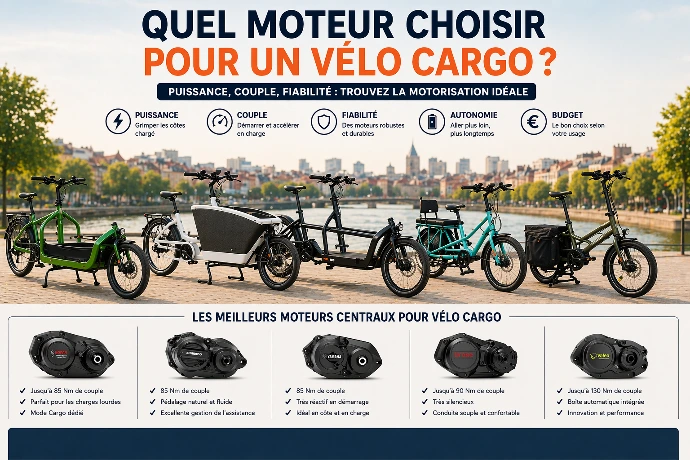
To learn more, read our article: Which motor to choose for a cargo bike?
READ❌ Disadvantages
- more expensive
- more technical maintenance: read our article on electric motor maintenance
- faster wear of the transmission
- reliability issues with certain models (like with the brand Ananda)
- complex customer service with certain brands (like Shimano)
- if disassembled, the bike frame is not usable (no bottom bracket)
Examples of bikes with mid-drive motors
🔝 Known motor brands:
- Bosch (Cargo Line, Performance CX)
- Shimano (Steps EP8)
- Yamaha PW-X
- Brose
- Valeo Cyclee
- Tongsheng (TSDZ2, TSDZ8)
🚲 Known cargo bike models:
- Bullitt (equipped with Shimano)
- Urban Arrow (Bosch Cargo Line)
- Tern GSD (Bosch)
- Yuba Spicy Curry (Bosch/Yamaha)
- Douze Cycles (Brose, Yamaha, Bosch)
👉 These bikes almost exclusively use central motors for their power.
3. Comparison of hub motor vs mid-drive motor
| Criteria | Hub motor | Mid-drive motor |
|---|---|---|
| 💰 Price | ⭐⭐⭐⭐ | ⭐⭐ |
| 🚴 Feel | ⭐⭐ | ⭐⭐⭐⭐⭐ |
| ⛰️ Climbing | ⭐⭐ | ⭐⭐⭐⭐⭐ |
| ⚙️ Maintenance | ⭐⭐⭐⭐ | ⭐⭐⭐ |
| ⚖️ Stability | ⭐⭐ | ⭐⭐⭐⭐⭐ |
| 🔋 Range | ⭐⭐⭐ | ⭐⭐⭐⭐ |
| 📦 Cargo use | ⚠️ limited | ✅ ideal |
4. Which motor to choose for a cargo bike?
The cargo bike completely changes the game. When talking about traditional electric bikes, the choice between hub motor and mid-drive motor often remains a question of comfort or budget.
But with an electric cargo bike, the situation is completely different.
Why?
Because a cargo bike imposes much greater mechanical, physical and safety constraints.
If a standard bike carries 1 person (~70 kg), a cargo bike, on the other hand, carries:
- 1 to 2 children (20 to 50 kg)
- groceries or equipment (10 to 40 kg)
- sometimes up to 150–200 kg in total.
The hub motor could be limited here because it pushes constantly when equipped with apedal sensor, does not "understand the cyclist's effort and lacks progression.
Starting would therefore be difficult with a possible loss of control and inefficiency on inclines. avec une perte de contrôle possible et une inefficacité en côté.
Concrete example
- Standard bike → hub motor 40 Nm sufficient
- Loaded cargo bike → minimum 75 to 85 Nm recommended
👉 An undersized motor:
- wears out faster
- uses more battery
- heats up quickly
Light transport (errands, short trips)
👉 possible with wheel motor
- flat terrain
- low load
Transporting children or heavy loads
👉 crank motor required
Why?
- better torque
- more stable start
- increased safety
👉 The central motor allows for better power management through the transmission
5. Which motor to choose according to your profile?
City / bike commuting
Here you can choose a wheel motor or a lightweight crank motor.
- if on a tight budget → wheel
- otherwise → Shimano or Bosch
Hilly terrain
👉 crank motor required
Family cargo bike
👉 Bosch Cargo Line / Shimano EP8
Small budget
👉 Bafang or Ananda wheel motor
DIY conversion
👉 wheel motor or Tongsheng TSDZ2
6. Mistakes to avoid
❌ choosing a wheel motor low torque for a heavy cargo
❌ underestimating motor torque !
❌ prioritising only price
❌ ignoring customer service (customer service is very important!!)
Conclusion: wheel motor or crank?
👉 Wheel motor:
- economical
- simple
- ideal for city
👉 Crank motor:
- powerful
- natural
- essential for cargo